
Home / Invisalign / Invisalign Singapore Guide / Invisalign vs Braces Singapore
Invisalign vs Braces
Singapore (2026)
A clear, honest comparison of cost, comfort, visibility, suitability, and treatment timelines — to help you make a confident, well-informed decision. Reviewed by Dr Jonathan Liu, Singapore CBD.
Both Invisalign and braces can straighten teeth effectively. The right choice depends on case complexity, lifestyle, and compliance capacity. Invisalign is clear and removable; braces are fixed and more powerful for complex movements. Neither is universally better — your dentist confirms which suits your case after clinical assessment.
| Factor | Invisalign | Metal / ceramic braces |
|---|---|---|
| Visibility | ✓ Nearly invisible | Visible brackets and wires |
| Removable | ✓ Yes — 20-22 hrs/day wear | — Fixed throughout treatment |
| Case complexity | Mild to complex (case-dependent) | ✓ Mild to severe |
| Bite correction | Possible with attachments | ✓ Full capability |
| Oral hygiene | ✓ Easy — removes for cleaning | More demanding; special tools needed |
| Food restrictions | ✓ None — remove to eat | Avoid hard, sticky, crunchy foods |
| Comfort | ✓ Smooth edges; mild pressure | Brackets may irritate lips and cheeks |
| Compliance required | Yes — 22 hrs/day is critical | ✓ Fixed; no compliance needed |
| Treatment duration | 6 – 24 months | 18 – 36 months (severe cases) |
| Typical cost (Singapore) | S$2,500 – S$13,500+ | S$4,000 – S$7,000 |
| MediSave / CHAS | — Not claimable | — Not claimable |
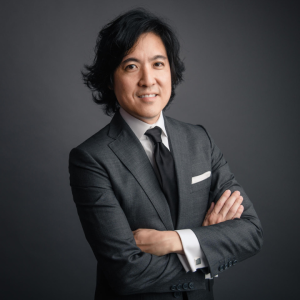 Medically reviewed by
Dr Jonathan Liu
· BDS (NUS) · SDC Reg. D21395J · Certified Invisalign Provider · 25+ Years · Published Oct 2025 · Updated May 2026 · 7 min read
Medically reviewed by
Dr Jonathan Liu
· BDS (NUS) · SDC Reg. D21395J · Certified Invisalign Provider · 25+ Years · Published Oct 2025 · Updated May 2026 · 7 min read
What makes Invisalign different
Invisalign is a clear aligner system that uses a sequence of custom-designed, removable trays to progressively reposition teeth. Each aligner is made from SmartTrack® — a proprietary multilayer polyurethane developed by Align Technology, the same material used in over 20 million cases worldwide.
Constant, gentle force delivery rather than the sharp periodic force of wire tightening. Improved fit and movement control compared to single-layer generic aligner plastics. The material recovers its shape after removal, maintaining consistent pressure throughout each tray's wear period.
Invisalign aligners are scalloped to follow each patient's individual gumline — unlike generic aligners with straight-cut edges. This means the plastic does not dig into the gum margin, reduces soft tissue irritation, and gives a more natural fit during extended daily wear.
Each case is digitally staged from the first aligner to the last before production begins. Patients preview the full movement sequence before committing to treatment. This allows refinement of the plan and sets clear expectations for timeline and outcome.
Small tooth-coloured composite shapes bonded temporarily to selected teeth, enabling the aligners to achieve rotations, vertical movements, and bite corrections that a smooth aligner cannot manage alone. Not all cases require them; their use is planned digitally before treatment starts.
Invisalign's primary advantages over braces are discretion, removability, and the absence of metal components — not superior force or universal versatility. For complex movements, the system requires careful attachment planning and consistent compliance to match what braces achieve passively.
What braces do that aligners cannot always match
Fixed braces use metal or ceramic brackets bonded to each tooth, connected by an archwire. The wire applies continuous force 24 hours a day — no compliance required. This is their primary structural advantage over removable aligners.
Classic stainless steel brackets and wires. Most affordable. Highest force capacity. Visible but highly reliable across all case complexities.
Typical cost: S$4,000 – S$7,000
Tooth-coloured brackets. Less visible than metal. Similar mechanical capability. Slightly higher cost; brackets can stain with coloured foods and drinks.
Typical cost: S$5,500 – S$8,000
Passive slide mechanism replaces elastic ties. Potentially reduced friction and fewer appointments. Available in metal and clear versions.
Typical cost: S$6,000 – S$9,000
Brackets bonded to the inner (tongue-side) surface of teeth. Completely hidden from view. Premium cost; requires specialist fitting; initial speech adjustment is longer.
Typical cost: S$8,000 – S$14,000+
The compliance advantage: Braces work 24 hours a day without any patient action required. For patients who struggle to maintain 22-hour daily aligner wear, braces typically produce more predictable outcomes.
Five factors that determine the right choice
1 — Appearance
Near-invisible at conversational distance. SmartTrack aligners are transparent; attachments are tooth-coloured and discreet. The preferred choice for client-facing professionals, public speakers, and image-conscious adults.
Metal brackets and wires are visible. Ceramic options reduce visibility. Lingual braces are hidden entirely but at significantly higher cost and with longer speech adaptation. No option matches Invisalign for day-to-day invisibility.
2 — Comfort
Mild tightness for 1–2 days after switching aligners. Smooth SmartTrack edges trimmed to the gumline — no wires, no brackets, no ulcers. Most patients report significantly more comfortable day-to-day wear compared to fixed braces.
Soreness after tightening appointments (typically every 4–8 weeks). Brackets and wire ends can irritate the inside of lips and cheeks, particularly in the first weeks. Orthodontic wax reduces but does not eliminate this. Most patients adapt over time.
3 — Eating, hygiene & daily life
Remove before eating — no food restrictions whatsoever. Brush and floss as normal. Aligners cleaned separately with a soft brush. Practical for business dinners, travel, and social events. Must be reinserted promptly to maintain 22-hour wear.
Avoid hard (nuts, ice), sticky (gummies, toffee), and crunchy foods that can dislodge brackets. Cleaning requires interdental brushes, floss threaders, or a water flosser around brackets and wires. More demanding but non-negotiable for preventing decay during treatment.
4 — Treatment duration
Typically 6–24 months. For mild to moderate cases, often comparable to or faster than braces. Duration is highly compliance-dependent — missing daily wear time extends the timeline proportionally. Complex bite cases may still require 18–24 months.
Typically 18–36 months for severe cases. Shorter for mild cases with fixed treatment. Because braces apply force 24 hours a day, timeline is less dependent on patient behaviour — making them more predictable for complex cases regardless of lifestyle.
5 — Cost in Singapore
S$2,800–S$10,500+ before GST (at Dentalis). Fee reflects digital planning, SmartTrack manufacturing, ClinCheck staging, and clinical monitoring — not just the aligner trays. Instalment plans available. MediSave and CHAS not claimable.
Metal: S$4,000–S$7,000. Ceramic: S$5,500–S$8,000. Lingual: S$8,000–S$14,000+. Dentalis offers Invisalign only — braces cost data is provided for comparison. MediSave and CHAS not claimable for orthodontics.
The most accurate comparison requires quotes for your specific case. Always confirm whether refinements, retainers, and GST are included in any quoted fee.
Suitability — when each option is more appropriate
- Mild to moderate crowding or spacing
- Selected overbite or underbite correction
- Post-brace relapse
- Discretion at work is a priority
- Removability for eating and social events matters
- Oral hygiene is easier to maintain without fixed appliances
- The patient is reliable with daily wear compliance
- Severe crowding or significant rotations
- Complex bite correction requiring full-time force
- Significant skeletal discrepancies
- Compliance with 22-hour wear is likely to be inconsistent
- Teenagers who may not reliably reinsert aligners
- Cases where continuous 24-hour force is clinically preferred
There is no universal "better" option. The right choice is the one suited to your specific case — confirmed after clinical assessment, not before.
At Dentalis, Dr Jonathan Liu will assess your alignment, bite, and lifestyle — then walk you through what each option means for your specific situation before you commit to anything.
Invisalign vs braces for adults and teenagers
Adults
Invisalign is the most requested orthodontic option among working professionals in Singapore CBD. The reasons are practical: no visible metal during client meetings, the ability to remove aligners for dinners and presentations, and easier maintenance of oral hygiene during a treatment that may span one to two years.
For adults with moderate to complex cases, Invisalign with attachments can achieve outcomes comparable to braces. Cases involving significant skeletal discrepancies or severe bite changes may still favour braces for mechanical efficiency. Dr Liu will advise based on your clinical assessment — not a preference for one system.
Teenagers
Both Invisalign Teen and traditional braces are effective for adolescent orthodontic treatment. The distinction is compliance. Invisalign Teen includes blue compliance indicators that fade with wear — a visible signal of whether aligners are being worn as required. Success depends substantially on the teenager's discipline and parental oversight.
For teens unlikely to maintain 22-hour daily wear consistently, braces are often the more predictable choice — they work continuously without requiring any patient action. This is a lifestyle and behavioural consideration, not a clinical one.
Invisalign Teen works well for motivated teenagers with parental support. For those less likely to maintain compliance, braces produce more reliable outcomes.
Direct-to-consumer aligners — what to know
Singapore has a growing number of direct-to-consumer (DTC) aligner brands offering treatment at significantly lower prices, typically via app-based monitoring rather than in-person clinical supervision. The most prominent global example, SmileDirectClub, ceased operations in 2023 following reports of worsened crowding, poor bite alignment, and lack of clinical oversight for significant numbers of patients.
Orthodontic treatment involves more than repositioning front teeth. Jaw function, bite forces, root movement, and gum health are all factors that require physical examination and radiographic evaluation to assess and monitor safely. These cannot be adequately evaluated through photographs submitted via an app.
DTC aligners may be appropriate for very mild, purely aesthetic cases in healthy mouths. For any case involving bite correction, rotations, or pre-existing gum conditions, dentist-supervised treatment is the appropriate standard of care.
Dentalis offers Invisalign with in-person clinical review every 6–8 weeks, personal case staging by Dr Jonathan Liu, and full iTero Lumina Pro 3D scanning for every patient. The monitoring is part of what you are paying for.
Retention — what both systems have in common
Whether you complete treatment with Invisalign or braces, retainers are required afterwards. Teeth naturally drift over time — without ongoing retention, alignment gradually reverts toward its pre-treatment position regardless of how long or well treatment went.
Retainer protocols are similar for both: full-time wear immediately after treatment, transitioning to night-time wear for long-term maintenance. Retention is considered lifelong. Patients who stop wearing retainers after a year or two frequently experience measurable relapse within five years.
The investment in orthodontic treatment — whether Invisalign or braces — is protected by consistent retainer wear. Without retention, alignment is not permanent for either system.
“Invisalign outcomes are determined by biomechanical planning, refinement control, and patient compliance — not by marketing tier labels. The SmartTrack® system is trusted globally, but long-term stability depends on how precisely each case is designed and monitored — with Invisalign or with braces.”
— Dr Jonathan Liu · Principal Dentist and Founder · BDS (NUS) · SDC Reg. D21395J · 25+ Years
Frequently asked questions
There is no universal answer. Invisalign suits mild to moderate cases and patients who prioritise discretion and removability. Braces are more appropriate for severe crowding, complex bite corrections, and patients where consistent 22-hour aligner compliance is unlikely. Your dentist confirms which system suits your case after clinical assessment — not before.
Not always. Metal braces typically cost S$4,000–S$7,000 in Singapore. Invisalign starts from S$2,800 (Express) and ranges to S$10,500+ (Comprehensive). For mild to moderate cases the costs are comparable. Complex bite correction with braces can be cost-competitive with Comprehensive Invisalign. The accurate comparison requires quotes for your specific case — always confirm whether refinements, retainers, and GST are included.
Generally, no. Invisalign causes mild tightness when switching to a new aligner set, typically settling within 1–2 days. Braces can cause soreness after tightening appointments and may cause ulcers from wire or bracket irritation on the lips and cheeks. Invisalign's smooth SmartTrack edges, trimmed to the gumline, tend to feel more comfortable in daily wear for most patients.
For certain complex movements — particularly rotations and vertical correction — braces can achieve results faster because they apply continuous force 24 hours a day. For mild to moderate cases, Invisalign frequently finishes in comparable or shorter time. Invisalign duration is also compliance-dependent: missed wear time extends the timeline in a way that fixed braces are not subject to.
For mild to moderate cases, Invisalign can achieve outcomes comparable to braces when treatment is carefully planned. Severe skeletal discrepancies, significant vertical movements, and very complex bite corrections may still favour braces or a combined orthodontic-surgical approach. Suitability is confirmed at clinical assessment — your dentist can advise which system is appropriate for your specific case.
Yes. Invisalign Teen includes blue compliance indicators that fade with wear, making it easier to monitor daily usage. Success depends substantially on the teenager's discipline and parental support. For teens unlikely to maintain 22-hour daily wear consistently, braces are often the more predictable choice — they work continuously without requiring patient compliance. The decision should factor in behavioural patterns as much as clinical need.
Reviewed by Dr Jonathan Liu, BDS National University of Singapore · SDC Registration D21395J · Principal Dentist and Founder, Dentalis · 25+ years of clinical practice · 10,000+ patients
Braces cost data is provided for Singapore market comparison only. Dentalis offers Invisalign; braces are not provided at this practice. Rated 5.0 Stars Google reviews. Last reviewed: May 2026. Next review: November 2026.
This guide provides general patient education and does not constitute clinical advice or a treatment quote. Suitability confirmed only after in-person clinical assessment. All fees before 9% GST, subject to change without notice — confirm at consultation. In accordance with the Healthcare Services (Advertisement) Regulations 2021. Dentalis is a MediSave-accredited and CHAS-enrolled private dental clinic at 52 Craig Rd, Tanjong Pagar, Singapore 089690. Maxwell MRT (TE18, Exit 3) · Tanjong Pagar MRT (EW15) · Outram Park (EW16/NE3/TE17).
A Consultation Is the Right Place to Begin.
A clinical assessment confirms your suitability, the right system for your alignment profile, and transparent pricing — with no obligation.
Nothing is scheduled until you are ready.
From S$2,800 before GST · Mon–Fri 9am–6pm · Sat 9am–1pm · 52 Craig Rd, Tanjong Pagar · Maxwell MRT (TE18) · Tanjong Pagar MRT (EW15)