
Home / Invisalign / How Long Does Invisalign Take?
The Invisalign Guide
How Long Does Invisalign Take?
Realistic timelines by case type, what affects treatment duration, and when you will start seeing results — explained by Dr Jonathan Liu, Singapore CBD.
The Short Answer
Invisalign treatment typically takes 6 to 18 months, depending on how much your teeth need to move, your bite complexity, and how consistently you wear your aligners. Mild cases may complete in under a year; complex bite corrections can take longer. For a full overview of Invisalign in Singapore — costs, types, and candidacy — see the complete Invisalign Singapore guide.
Wearing aligners for 22 hours per day is the single most controllable factor in keeping treatment on schedule. Refinements may add time but improve final accuracy and long-term stability.
At a Glance
Invisalign timelines — Singapore
Express / Relapse
7 wks – 2 months
Minor shifts, post-ortho relapse
Mild
6 – 9 months
Minor crowding, small gaps
Moderate
9 – 12 months
Noticeable crowding, mild bite issues
Complex
12 – 18+ months
Significant crowding, bite correction, rotations
Treatment Averages
What does "average" actually mean?
On average, Invisalign treatment takes between 12 and 18 months. However, "average" can be misleading. Two people can both be told they need Invisalign, yet one may finish in 6 months while another needs closer to 18. Treatment time is based on how your teeth and bite respond to controlled movement — not a fixed schedule.
Compared to traditional metal braces, Invisalign is often more precise, because each tooth movement is digitally planned in advance. It can be more efficient long-term, because only the teeth that need to move are moved. And it is more sensitive to compliance, since the aligners are removable.
Invisalign is not about speed — it is about planned, biological movement done correctly. Rushing the process increases the likelihood of tracking issues and refinements, not the reverse.
Duration Factors
What determines how long your treatment takes?
Several clinical and behavioural factors influence your Invisalign timeline. Understanding them helps set realistic expectations before you begin.
Factor 01
Degree of tooth movement
Small spacing or mild crowding requires fewer movements and fewer sets of aligners. Larger movements — especially rotations or tipping — take longer and may require attachments.
Factor 02
Bite complexity
Simple alignment is shorter. Correcting an overbite, underbite, or crossbite extends treatment — often to 12 months or beyond. Bite corrections are the most common reason cases run longer than expected.
Factor 03
Compliance — 22 hours per day
Wearing aligners "most of the time" is the most common reason treatment runs longer than planned. Aligners should be worn 22 hours per day, removed only for eating, drinking (except water), and oral hygiene.
Factor 04
Gum health
Healthy gums allow teeth to move predictably. Inflammation, active decay, or gum disease may require pauses in treatment. Gum health is assessed before treatment begins at Dentalis.
Factor 05
Refinements
Refinements are additional aligners used to fine-tune final positioning. They are common, particularly in adult cases, and often improve precision — but may add a few weeks or months to the overall timeline.
Factor 06
Dentist-led planning
The quality of the ClinCheck® treatment plan directly affects tracking accuracy. Cases reviewed and staged by an experienced dentist are more likely to stay on the projected timeline with fewer unexpected detours.
A clinical assessment and iTero Lumina Pro scan at Dentalis will confirm whether you are likely a 6-month, 12-month, or longer-term case — before you commit to anything.
Timeline by Case
Invisalign timelines by case type
Your duration estimate is confirmed after a clinical assessment and digital scan. These ranges reflect real-world outcomes, not marketing benchmarks.
Mild cases
6 – 9 months
- Minor crowding or spacing
- Post-brace relapse
- Small aesthetic adjustments
- Fewer aligners, minimal bite correction
Moderate cases
9 – 12 months
- Noticeable crowding
- Mild bite issues
- Tooth rotations
- Most common range for adults
Complex cases
12 – 18+ months
- Significant crowding or spacing
- Overbite, underbite, crossbite correction
- Multiple rotations or vertical movements
- Attachments, elastics, and refinements common
Visible Progress
When will you start seeing results?
Visible change and treatment completion are different milestones. Most patients notice early movement long before treatment is finished.
- First 2–4 weeks
You will feel pressure and tightness when switching to a new tray. This is a sign teeth are moving as planned — not a cause for concern. - 2–3 months
Visible alignment changes often appear, particularly for front teeth. Most patients notice a visible improvement in spacing and crowding at this stage. - 6 months onward
Most people notice clear, meaningful improvements. Earlier changes do not mean treatment is finished — final stages focus on bite balance and long-term stability. - End of treatment
Retainers are provided to hold your result in place. Wearing retainers nightly long-term is the non-negotiable component of a lasting outcome. See the Invisalign retainers guide for full wear protocol.
A Common Question
Can Invisalign be done faster?
Some marketing claims suggest Invisalign can be rushed. In practice, tooth movement follows biology — not deadlines. Advancing trays too quickly can cause tracking issues, increase the number of refinements needed, and ultimately extend total treatment time.
Switching aligners ahead of schedule without clinical approval is the most reliable way to extend, not shorten, your treatment.
Attachments and refinements are not setbacks
Attachments are small tooth-coloured buttons bonded to specific teeth to allow more controlled movement. Refinements are additional aligner sets used to fine-tune final positioning. Both are tools used to achieve a better, more stable result — not indicators that treatment is failing or unusually slow.
At Dentalis, refinements and attachment decisions are made by Dr Jonathan Liu during scheduled review appointments every 6–8 weeks, based on how your teeth are tracking against the digital plan.
At Dentalis
Photobiomodulation — supporting treatment progress
At Dentalis, Dr Jonathan Liu uses the Gemini 810+980 dual-wavelength laser (Ultradent) as part of Invisalign case management. One application is photobiomodulation (PBM) — a low-level laser therapy delivered at 810nm that may support cellular activity in the periodontal ligament and surrounding bone tissue during tooth movement.
PBM is not a shortcut. It is used as a clinical adjunct alongside precise ClinCheck® planning, appropriate attachment design, and consistent 22-hour aligner wear — the foundations that determine tracking accuracy and overall timeline. Whether PBM is appropriate for your case is confirmed at your clinical assessment.
Laser-assisted treatment is one tool among several. It works when the biomechanical plan is sound. It cannot substitute for it.
Gemini 810+980 — at a glance
- Dual-wavelength laser: 810nm (diode) + 980nm (diode)
- Manufacturer: Ultradent Products Inc.
- PBM application: 810nm wavelength, low-level, non-thermal
- Used as a clinical adjunct — not a standalone treatment
- Applied chairside by Dr Jonathan Liu at scheduled review appointments
Clinical note
Evidence on PBM and orthodontic tooth movement is emerging. Results vary by case. Dr Liu will discuss whether this adjunct is appropriate for your specific treatment plan at consultation.
Comparison
Does Invisalign take longer than braces?
Not necessarily. Traditional braces can move teeth quickly at first but often move all teeth simultaneously — including those already well-positioned. Invisalign focuses on targeted movement, which may appear slower in early stages but is often more efficient overall.
For mild to moderate cases, Invisalign frequently finishes as fast as, or faster than, braces — with considerably better comfort and discretion. For complex skeletal issues, traditional braces or a combined approach may be more appropriate.
The honest answer is that the right system is the one suited to your specific case — not the faster-marketed one. Dr Liu will give you a clear recommendation based on your clinical assessment, not system preference.
Invisalign vs Braces — Full ComparisonSingapore Context
Invisalign timelines in Singapore — what to expect
In Singapore, most Invisalign patients are adults with busy professional schedules. Real-world factors that affect timelines locally include irregular wear during long workdays or travel, frequent coffee or snacking habits that increase aligner removal time, and occasionally missed review appointments.
Dentist-led care with structured review appointments every 6–8 weeks helps keep treatment on track — particularly for CBD-based patients balancing work, travel, and social obligations.
At Dentalis, Tanjong Pagar: Dr Jonathan Liu reviews every case at each check-in. If tracking drifts, adjustments are made at that appointment — not weeks later when more trays have already been worn incorrectly.
Expert Interpretation
On timelines, tracking,
and what actually matters
Dr Jonathan Liu is a certified Invisalign provider and Principal Dentist and Founder at Dentalis, with over 25 years of clinical experience and more than 10,000 patients treated. He personally stages and monitors every Invisalign case at the practice.
Invisalign outcomes are determined by biomechanical planning, refinement control, and patient compliance — not by marketing tier labels or promises of speed. The SmartTrack® material is trusted globally, but long-term stability depends on how precisely each case is designed and monitored. Dr Jonathan Liu · Principal Dentist and Founder · Dentalis
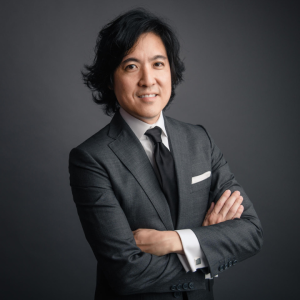
"Invisalign is not a passive treatment. Tracking accuracy, aligner compliance, and timely refinement decisions are what separate a good outcome from an average one — regardless of which tier the case sits in."
Dr Jonathan Liu · Principal Dentist and Founder · BDS (NUS) · SDC Reg. D21395J · 25+ Years
Common Questions
Frequently asked questions
Yes, for mild cases such as minor crowding, spacing, or relapse after previous orthodontic treatment. Most cases take longer depending on bite complexity and the degree of movement required. Your likely duration is confirmed at the clinical consultation — not before.
Adult teeth may move slightly more slowly than teenage teeth, but age alone does not prevent successful or timely treatment. Most adults in Singapore complete treatment within 12–18 months. Pre-treatment gum health plays a larger role than age in determining speed.
Refinements can add time, but they improve accuracy, bite balance, and long-term stability — often resulting in a better final outcome. They are common, particularly in adult cases, and are not a sign that treatment is failing. Most Invisalign plans factor in the possibility of refinements from the start.
Yes. Invisalign works best when worn 22 hours per day. Reduced wear is the most common cause of treatment delays and tracking issues. The two hours off are intended for eating, drinking non-water beverages, and oral hygiene — not convenience breaks throughout the day.
New trays should feel firm or tight during the first few days of each switch — this confirms your teeth are moving as planned. Your dentist will verify tracking at scheduled review appointments every 6–8 weeks. If a tray feels loose immediately upon insertion, contact the clinic — it may indicate a tracking issue requiring attention.
Not necessarily. For mild to moderate cases, Invisalign frequently finishes as fast as or faster than traditional braces. Braces move all teeth simultaneously, while Invisalign focuses on targeted movement — which is often more efficient overall. For complex skeletal discrepancies, braces or a combined approach may be more appropriate. Your dentist will recommend the right system based on your clinical assessment.
Ready to Find Out?
See your likely timeline
before you commit
A digital iTero Lumina Pro scan and clinical assessment at Dentalis will tell you which case category you are — and give you a realistic timeline, not a marketing estimate.
52 Craig Rd, Tanjong Pagar · Mon–Fri 9am–6pm · Sat 9am–1pm
Clinical Sources
References
Clinical information cited in this guide is drawn from the following primary sources.
- Haouili N et al. — Has Invisalign improved? A prospective follow-up study on the efficacy of tooth movement with Invisalign. American Journal of Orthodontics and Dentofacial Orthopedics, 2020. Evaluates tooth movement accuracy in clear aligner therapy, including factors affecting treatment duration and tracking compliance.
- Blundell HL et al. — Predictability of tooth movement with Invisalign based on achievement of 3D treatment goals. American Journal of Orthodontics and Dentofacial Orthopedics, 2021. Assesses clinical predictability of Invisalign tooth movements and the role of refinements in achieving planned outcomes.
- Singapore Dental Council — Registered Dentists and Specialists Directory. Regulatory body confirming Dr Jonathan Liu's registration and clinical standing (SDC D21395J).
Author & Clinical Review
Written by: Dentalis Clinical Editorial Team, led by Jennifer Choi, Marketing Director and Co-Founder
Medically reviewed by: Dr Jonathan Liu · Principal Dentist and Founder · BDS (NUS) · SDC Reg. D21395J · 25+ Years of Clinical Experience · 10,000+ patients · Certified Invisalign Provider
Recipient of three global awards in 2026. Rated 5.0 from 136 Google reviews.
This guide is for educational purposes and does not replace in-person clinical assessment. Treatment timelines vary by individual case. Published October 2025 · Updated 17 July 2026.