
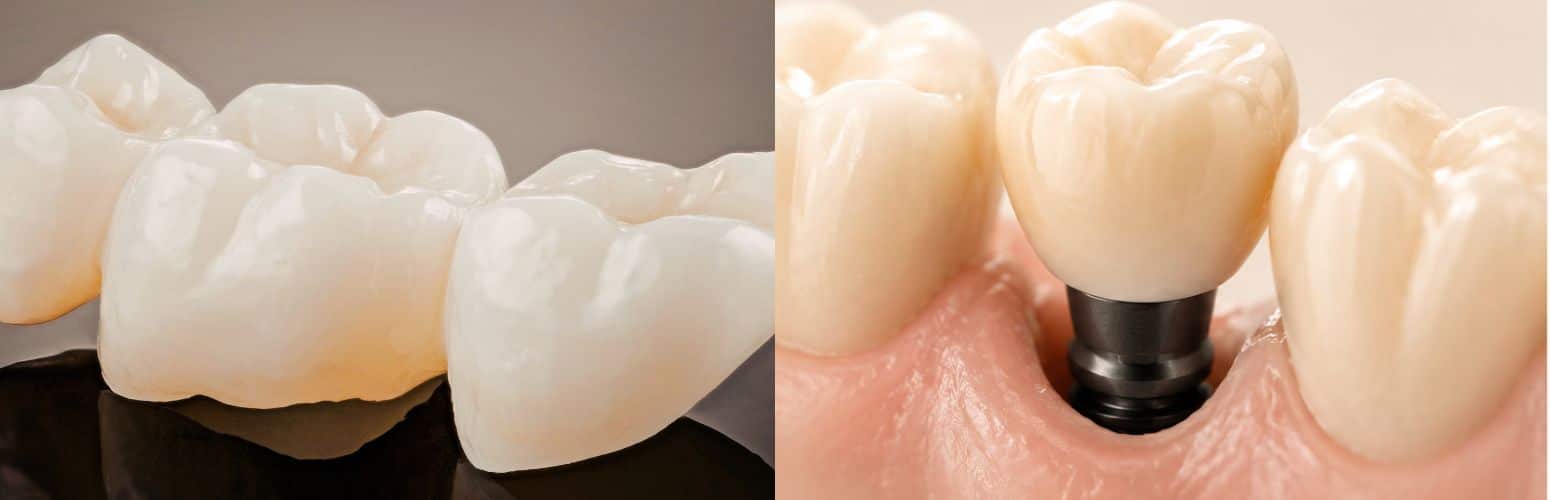

A dental bridge and a dental implant both replace a missing tooth visibly — but they achieve this through structurally different means, with different consequences for adjacent teeth and the jawbone beneath the gap.
A dental bridge replaces the visible part of a missing tooth by spanning the gap between the two adjacent teeth. Those adjacent teeth must first be prepared — filed down significantly to receive crowns that anchor the bridge in place. This is an irreversible procedure. Once healthy adjacent teeth are cut down for a bridge, they are permanently altered.
A dental implant replaces the missing tooth independently. The fixture is placed in the jawbone at the gap site. The adjacent teeth are not touched. If those adjacent teeth are healthy and structurally intact, there is a strong clinical argument for preserving them rather than preparing them to support a bridge.
A bridge that uses two healthy adjacent teeth as supports permanently alters two structurally sound teeth to replace one missing one. If a bridge abutment tooth develops a complication — root canal, crown fracture, decay under the crown — the entire bridge may need to be replaced. If an implant crown fails, typically only the crown needs replacing. The fixture usually remains sound.
The bone beneath a bridge pontic (the artificial tooth in the middle) is not stimulated by a root. Alveolar resorption continues beneath the gap site over time, potentially causing a visible contour change under the bridge as the gum line changes. An implant provides root-level loading which clinical evidence generally associates with better bone maintenance at the placement site.1