
Home / Invisalign / How to Choose the Best Invisalign Dentist Singapore
The Invisalign Guide · How to Choose a Provider
How to Choose the Best Invisalign Dentist in Singapore —
10 Questions That Actually Matter
No paid placements. No rankings. The criteria that separate providers who deliver predictable outcomes from those who don't — and the questions to ask before you commit.
The Short Answer
There is no single best Invisalign dentist in Singapore — but there are criteria that reliably separate providers who deliver predictable outcomes from those who don't. The difference lies in who stages your ClinCheck® treatment plan, how frequently you are reviewed in person, what is included in refinements, and whether bite function and facial proportions are considered alongside tooth alignment. Provider tiers measure annual case volume at clinic level — not the clinical quality of the individual dentist treating you.
One further consideration worth knowing: Dentalis offer photobiomodulation (PBM) — low-level laser therapy applied chairside during treatment that may support bone remodelling and potentially accelerate treatment progress.
For a complete overview of Invisalign in Singapore — costs, case types, and what treatment involves — see the complete Invisalign Singapore guide.
At a Glance
What you need to know before choosing
Providers in Singapore
400+
Registered Invisalign clinics on Align Technology's official directory
Provider tiers
9 levels
Bronze → Red Diamond — based on annual case volume at clinic level, not individual dentist quality
Review frequency
Every 2–8 weeks
Varies significantly by clinic — ask explicitly before committing
Refinement policy
Varies by clinic
Some include all refinements; others charge S$500–S$1,500+ per episode — confirm before signing
MediSave / CHAS
Not claimable
Invisalign is classified as cosmetic treatment in Singapore — some expat insurance plans may cover partially
Cost range
S$2,500–S$13,000
Before GST, depending on case complexity and treatment tier — see the cost guide
Before You Search
Why most "best Invisalign" lists in Singapore are paid placements
Search for "best Invisalign Singapore" and you will find pages ranking clinics, awarding them star ratings, and positioning certain practices as recommended choices. Most of these articles operate on a paid inclusion model. Clinics pay to appear, to be ranked higher, or to receive a "best for" label.
Listicle writers do not visit clinics for treatment. They do not review ClinCheck® plans, assess tracking accuracy, or evaluate how a practice handles refinements. The ranking reflects which clinics have a marketing budget — not which providers produce the most reliable orthodontic outcomes.
This is not a ranking article. It will not tell you which clinic to choose. It will give you the criteria to evaluate any clinic yourself — including Dentalis, which appears at the end of this guide alongside its answers to every question on the list. If you want to begin exploring Invisalign treatment, see the Invisalign service page at Dentalis for fees, technology, and how to book.
If you want a starting point based on independent opinion, patient reviews written directly by people who have completed treatment are more reliable than third-party listicles. The Singapore Dental Council register allows you to verify any dentist's registration and credentials directly.
The Core Principle
Why the provider matters more than the brand
Invisalign aligners are manufactured by Align Technology to a consistent global standard. The same SmartTrack® material, the same ClinCheck® planning software, the same aligner production process — regardless of which clinic you attend.
What varies entirely is the clinical judgement applied to your individual case. How the treatment is planned, staged, monitored, and corrected when teeth don't move exactly as intended depends entirely on the dentist treating you — not on which brand of aligner is prescribed.
Two patients with identical tooth positions and identical treatment tiers can end up with different outcomes depending on who reviewed the ClinCheck®, how attentively tracking is monitored, and how refinements are managed. The brand delivers the tool. The clinician delivers the outcome.
The most important question to ask before committing to any Invisalign provider in Singapore is not "what tier are they?" It is: "Who is actually planning and reviewing my case — and how often will I be seen in person?"
Understanding the System
What Invisalign provider tiers actually mean — and what they don't
Align Technology assigns provider tiers based on Invisalign cases completed at a clinic within a rolling annual period. Tiers reset annually — a clinic must sustain its volume to retain its designation.
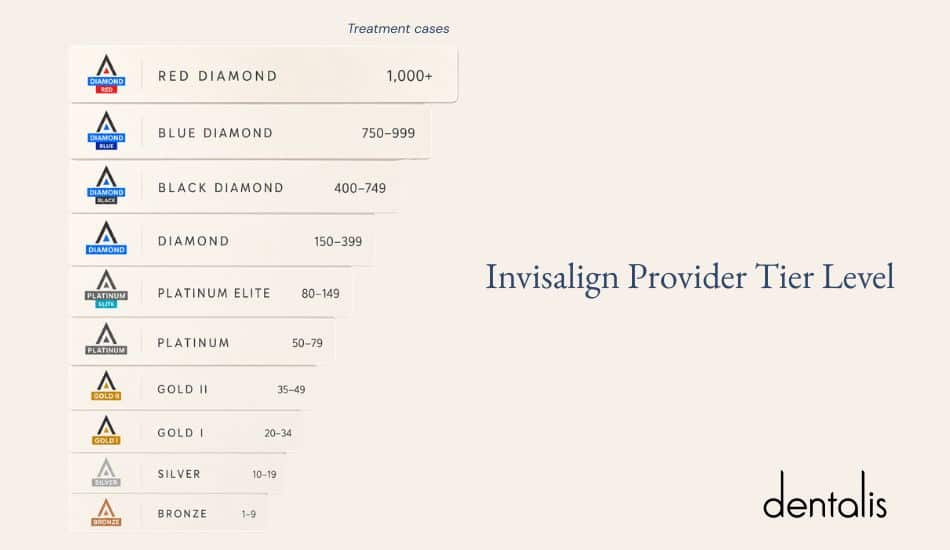
Three caveats that most clinic marketing won't tell you
1. Tiers are clinic-level, not dentist-level
In a multi-dentist practice, the tier reflects combined case volume across all dentists under that clinic registration. A group with 26 Invisalign-trained dentists each completing 15 cases per year easily reaches Black Diamond status at 400-749 combined cases — it could be a case of no individual dentist having treated more than 15-28 cases that year. The tier tells you about the practice, not about the specific clinician who will plan and review your case.
2. Tiers reset when dentists move clinics
A dentist with 15 years of Invisalign experience carries none of that case history when they move to a new practice. Their new clinic may show Bronze status while their individual clinical experience is substantially higher. A boutique practice opened by a clinician who has treated thousands of Invisalign patients will appear Bronze — this reflects the clinic's first year of registration, not the dentist's career.
3. Volume is not the same as case complexity
A high-volume practice processing large numbers of Express and Lite cases will accumulate tier points faster than a boutique practice managing complex comprehensive cases. Tier accumulation says nothing about which clinic handles harder orthodontic problems.
Use tiers as one signal — not a shortcut. They indicate clinics with meaningful Invisalign exposure. They are not a proxy for clinical quality, bite analysis depth, or treatment planning precision.
The Checklist
10 questions to ask before choosing your Invisalign dentist
Bring these to any Invisalign consultation. The answers will reveal more about the provider than any tier badge or listing article.
Who personally stages my ClinCheck® treatment plan?
ClinCheck® staging can be delegated. Some clinics submit your scan data to Align Technology's remote setup team, receive a default plan, and present it largely unchanged. Others have the treating dentist review, revise, and personally stage every movement. The latter allows bite correction, facial proportion, and clinical judgement to be built into the plan from the start. Ask explicitly: does the dentist treating me review and stage the ClinCheck® personally?
How often will I be seen in person — and by the same dentist?
Review frequency across Singapore clinics ranges from every 2 weeks to every 8 weeks. Some clinics have shifted to remote monitoring — photographs submitted via phone, reviewed without a physical appointment. For moderate and complex cases, in-person tracking is clinically necessary: confirming whether aligners are seating correctly requires an examination, not a photograph. Ask whether you will see the same dentist who planned your case at every appointment.
Are refinements included — and are extra visits charged?
Refinements are additional aligner sets used to fine-tune final positioning. They are common — particularly in adult cases — and a normal part of careful Invisalign management. Some clinics include all refinements; others charge S$500–S$1,500+ per episode. Some clinics also bill for review appointments beyond a set number. Confirm both before signing.
Are Vivera® retainers disclosed and costed upfront?
Retainers are not optional after Invisalign — they hold the result long-term. Vivera® retainers are purchased separately from Invisalign treatment at most clinics. The question is not whether they cost extra — it is whether the cost is disclosed at the planning stage, not presented as a surprise at the end of treatment. Ask for the full post-treatment cost before you sign.
Does the consultation consider my bite and facial proportions?
A well-planned case considers how the teeth relate to the bite, how lip support changes with tooth movement, how the smile arc follows the lower lip, and how alignment affects facial proportion over time. If the consultation is limited to a visual assessment of tooth spacing and a ClinCheck® preview — without bite analysis — that is a meaningful limitation, particularly for moderate and complex cases.
Does the clinic have an intraoral scanner?
An iTero scanner (or equivalent) produces a 3D digital model that feeds directly into ClinCheck® planning and enables digital smile simulation before treatment begins. The presence of an intraoral scanner is a baseline technology expectation for any clinic offering Invisalign in 2026. Physical impressions are a legitimate reason to ask further questions.
What is the treating dentist's individual Invisalign experience?
Ask about the individual dentist's experience — not the clinic's tier. How long have they been providing Invisalign? How many cases have they personally managed? Do they have experience with cases similar in complexity to yours? This is the question that tiers cannot answer, and the most important one for predicting your specific outcome.
Do you feel comfortable with this dentist?
An Invisalign journey takes 12 months to three years or more. You will attend appointments every few weeks throughout. The manner in which a dentist explains your treatment plan, answers your questions, and communicates through the process matters as much as their technical competence. A consultation where you felt rushed, or where questions were not answered clearly, is worth noting. You will be in this relationship for a long time.
Is the pricing clear and itemised before you sign?
A trustworthy Invisalign provider will disclose total treatment cost, what is and is not included, refinement policy, retainer fees, review appointment expectations, and payment options before you commit. If pricing is vague or requires you to "come in first," ask for an itemised quote before agreeing to anything.
Does the clinic focus on Invisalign specifically — or several aligner brands?
Some clinics offer Invisalign alongside other clear aligner systems — Zenyum, Eon Aligner, ClearCorrect, or others. A clinic offering multiple brands may have a broader frame of reference for matching system to case type, but may also have diluted case volume across brands, meaning individual Invisalign experience may be lower.
A clinic that focuses on Invisalign will tend to accumulate deeper Invisalign-specific experience: familiarity with ClinCheck® staging, SmartForce® attachment design, refinement protocols, and how the system responds to different tooth types and bite patterns. The right question is not "do they offer multiple brands" but "how much of this dentist's clinical time is spent on Invisalign specifically, and how does that translate to my case?"
Bonus question
Is photobiomodulation (PBM) available — and how is it applied?
PBM is a low-level laser therapy applied chairside during Invisalign treatment that may support bone remodelling and potentially accelerate treatment progress. Not all clinics offer it. The distinction that matters: chairside application by the treating dentist — where dosing and timing are clinician-controlled — is clinically different from a home-use device dependent on daily patient compliance. See the full guide to PBM and Invisalign in Singapore.
Book a complimentary virtual consultation or an in-clinic assessment with Dr Jonathan Liu at Dentalis, Tanjong Pagar.
The Standard to Expect
What a well-planned Invisalign treatment includes
Before treatment begins, a well-structured Invisalign consultation in Singapore should include the following. Use this as a baseline when evaluating any provider.
- An intraoral 3D scan — not a physical impression. Digital scanning integrates directly with ClinCheck® planning and enables smile simulation before aligners are ordered.
- X-rays if necessary — typically OPG (full jaw) and periapical as required, to understand root positions and bone health before moving teeth.
- Bite analysis — how upper and lower teeth meet at rest and in function. Bite discrepancies not addressed in the treatment plan can persist or worsen.
- A reviewed ClinCheck® plan shown to you — you should see the proposed tooth movements, understand where attachments will be placed, and have the opportunity to ask questions before any aligners are ordered. You are not obligated to accept the first plan presented.
- Summary disclosure of what is included — refinements, retainers, number of review appointments, what happens if an aligner is lost or broken, payment terms.
If a clinic presents you with a price and asks you to decide at the first appointment without providing these elements, ask for time to review.
Warning Signs
Red flags at an Invisalign consultation
None of these is a reason to walk out immediately. Each is a reason to ask a direct follow-up question before committing.
ClinCheck® presented as fixed on the first visit
You should be invited to review the plan, ask questions, and understand what is proposed before aligners are ordered. A plan presented as already finalised may indicate a default plan was accepted without dentist review.
Ask: "Did you personally stage this plan, or is this the default from Align?"
Remote monitoring as the primary model for a moderate or complex case
For simple cases, digital check-ins can supplement in-person visits. For cases involving bite correction, significant crowding, or multiple rotations, in-person tracking at regular intervals is the standard of care.
Ask: "How often will I be seen physically, and by which dentist?"
Refinements described as rare or unlikely
Refinements are a standard component of careful Invisalign management. A provider who minimises their likelihood may be managing expectations about cost rather than clinical reality.
Ask: "Are refinements included, and is there a cap on visits?"
Retainer fees mentioned only at the end of treatment
Post-treatment retention is foreseeable from day one. A provider who does not discuss retainer costs during the consultation is withholding relevant financial information.
Ask: "What will retainers cost, and when do I pay for them?"
Different dentist at every appointment
In large multi-dentist practices, patients often see different clinicians at each review. If continuity of care matters to you — and for a 12–36 month treatment, it should — confirm at the consultation whether you will see the same dentist throughout.
Ask: "Will I see the same dentist at every appointment?"
A Common Question
Invisalign dentist vs orthodontist — which is right for your case?
Both general dentists and orthodontists can provide Invisalign treatment in Singapore once certified by Align Technology. The right choice depends on your case complexity and personal preference.
General dentist (Invisalign-certified)
- 4 years dental school + Invisalign certification by Align Technology
- Can manage mild to moderate alignment and many complex cases effectively
- Typically S$2,800–S$8,500 before GST
- Right for: most adults with crowding, spacing, or mild-to-moderate bite issues
Orthodontist (specialist)
- Dental school + 2–3 years specialist orthodontic training
- Focused specifically on tooth movement, bite correction, jaw relationships
- Typically S$1,500–S$5,500 more than general dentist rates
- Right for: significant skeletal discrepancy, very severe crowding, complex bite correction
The honest qualifier: the 10 questions above apply equally to both. An orthodontist who delegates ClinCheck® staging and reviews via app delivers a different clinical experience from a general dentist who personally stages and reviews in person every three to four weeks. Professional category matters less than individual clinical depth and the quality of case management.
An Emerging Adjunct
Photobiomodulation (PBM) — is it available at your clinic?
Photobiomodulation is a low-level laser therapy applied chairside during Invisalign treatment that may support bone remodelling and potentially accelerate orthodontic tooth movement. A 2024 umbrella review identified 730–830nm as the effective wavelength range for orthodontic PBM. A 2023 meta-analysis reported improved alignment rates and shorter treatment duration in patients receiving PBM as a treatment adjunct.
It is not a standard offering across Singapore clinics. Where it is available, the mode of delivery matters clinically:
- Chairside application by the treating dentist — dosing, timing, and targeting are clinician-controlled, applied in the context of tracking review and case progression.
- Home-use devices (such as OrthoPulse) — patient-administered for five minutes per arch daily. Effectiveness depends on consistent daily compliance.
PBM is not a replacement for a well-staged treatment plan or 22-hour daily aligner compliance. It is one clinical adjunct — available at some clinics, applied where the treating dentist determines it is appropriate. For a detailed clinical overview, see the full guide to PBM and Invisalign in Singapore.
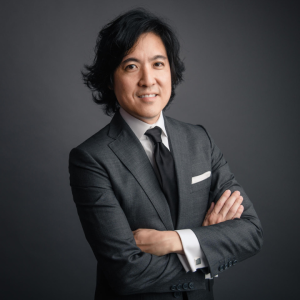
"Invisalign is not a sprint. Treatment runs 12 months to three years or more, depending on the case. The question most patients don't ask at the first consultation is whether they can sustain a relationship with this dentist over that time — because a clinical decision made in the first appointment needs to be tracked, refined, and corrected by the same person who made it. The continuity matters more than most people expect."
Dr Jonathan Liu · Principal Dentist and Founder · BDS (NUS) · SDC Reg. D21395J · 25+ Years of Clinical Practice
Transparent Disclosure
At Dentalis — how we answer these criteria
In the interest of transparency, here is how Dentalis responds to the questions above. Use the same framework to evaluate any other provider you are considering.
Who stages the ClinCheck®?
Dr Jonathan Liu personally reviews and stages every Invisalign treatment plan at Dentalis. No default plan is accepted without clinical review and revision where needed.
Review frequency
Every 3–4 weeks in person, and every 2 weeks where the case requires closer monitoring. Every appointment is with Dr Jonathan Liu — 25+ years of clinical practice, 10,000+ patients treated — the same dentist who planned your case, at every visit.
Refinements & visits
Review visits are not subject to a cap and are not billed separately at Dentalis. Refinement policy is disclosed and confirmed before you sign.
Retainers
Vivera® retainer fees are discussed and itemised at the consultation. Not a post-treatment surprise. Retainers are purchased separately — from S$600 per set before GST.
Bite & facial proportions
Dentalis uses Facial Harmony Planning — consideration of smile arc, lip support, facial balance, and bite stability — as a standard component of every treatment plan, not an optional add-on.
Intraoral scanner
iTero Lumina Pro — Align Technology's current scanner platform.
Treating dentist's experience
Dr Jonathan Liu. 25+ years of clinical practice. 10,000+ patients treated. Certified Invisalign provider. SDC Reg. D21395J. Every case at Dentalis is planned and reviewed personally by Dr Liu.
Comfort, service & manner
We cannot answer this one for you — the consultation is your opportunity to assess it directly. What we can tell you about the environment: Dentalis is a 3,000 sq ft boutique practice with 2,000 sq ft of lounge space designed to feel nothing like a clinic. Art books, spa music, and a calm unhurried setting — by appointment, never a waiting room queue. Surrounded by Tanjong Pagar's best restaurants, accessible by three MRT lines, with wellness studios including yoga and ice bath clubs nearby. In-clinic consultation: S$80 before GST. Virtual consultation: complimentary.
Pricing transparency
Fees are itemised at consultation: S$2,800 (Express) to S$8,500 (Comprehensive) before GST. Retainer fees, refinement policy, and review expectations confirmed before you sign. Full fee schedule at Invisalign at Dentalis.
Aligner brand focus
Dentalis focuses on Invisalign as the primary clear aligner system. Dr Liu's Invisalign-specific experience is not diluted across multiple aligner brands.
PBM available?
Yes. Dr Jonathan Liu uses the Gemini 810+980 dual-wavelength laser (Ultradent, 810nm) chairside at review appointments where clinically appropriate. PBM is included as part of the treatment plan — no separate charge.
Dentalis · 52 Craig Rd, Tanjong Pagar, Singapore CBD
Appointments available by advance booking · Mon–Fri 9am–6pm · Sat 9am–1pm
Common Questions
Frequently asked questions
No. Align Technology publishes a directory of certified providers at invisalign.com.sg — searchable by location and tier. This lists registered providers and their current tier. It does not rank by clinical quality. Third-party ranking articles are generally commercial placements, not independent assessments.
Tier reflects annual case volume at clinic level — not the individual dentist's skill, the quality of ClinCheck® staging, or how attentively cases are reviewed. High-volume exposure is a useful signal. It is not a guarantee of outcome quality. A boutique practice with an experienced principal dentist who plans and reviews every case personally may carry more individual clinical depth than a large clinic where cases are distributed across multiple associates.
Both can provide Invisalign once certified. For most adults with mild to moderate crowding, spacing, or bite issues — the majority of Invisalign cases in Singapore — an experienced general dentist manages the case effectively. For complex skeletal discrepancies or very severe crowding, an orthodontist's specialist training is clinically relevant. The questions about ClinCheck® staging, review frequency, and refinement policy apply equally to both.
No. Refinements are additional aligner sets used to fine-tune final positioning and are a standard component of careful Invisalign management, particularly for adult cases. They are a sign that the provider is committed to achieving the planned result — not that the original plan failed.
All dentists practising in Singapore must be registered with the Singapore Dental Council. You can verify any dentist's registration, qualifications, and practice address at sdc.gov.sg. Invisalign provider status and tier can be checked at the official Align Technology provider directory at invisalign.com.sg.
No. Invisalign is classified as a cosmetic dental treatment and is not claimable under MediSave or CHAS. Some international corporate and expatriate insurance plans may provide partial orthodontic coverage — confirm your policy's orthodontic benefit before your consultation.
Ready to Ask These Questions?
Book your Invisalign assessment at Dentalis
A clinical assessment and iTero Lumina Pro scan will give you a clear picture of your case type, realistic timeline, and what treatment involves — before you commit to anything.
52 Craig Rd, Tanjong Pagar · Mon–Fri 9am–6pm · Sat 9am–1pm
Clinical Sources
References
- AlBaqshi FS et al. — Predictability of Invisalign in Anterior Teeth Alignment: A Systematic Review. Cureus, 2025. Reviews evidence on Invisalign treatment predictability and factors affecting outcomes.
- White DW et al. — Discomfort associated with Invisalign and traditional brackets: A randomized, prospective trial. Angle Orthodontist, 2017. Compares patient-reported discomfort between Invisalign and fixed appliance treatment.
- Domínguez A et al. — Effective Parameters for PBM in Orthodontic Tooth Movement: An Umbrella Review. Photobiomodulation, Photomedicine, and Laser Surgery, 2024. Identifies optimal wavelength parameters for photobiomodulation in orthodontic treatment.
- Singapore Dental Council — Registered Dentists and Specialists Directory. Regulatory body for verification of dentist registration and credentials in Singapore.
- Align Technology — Official Invisalign Provider Directory. Official provider directory for Singapore, listing certified providers and current tier status.
Author & Clinical Review
Written by: Dentalis Clinical Editorial Team, led by Jennifer Choi, Marketing Director and Co-Founder
Medically reviewed by: Dr Jonathan Liu · Principal Dentist and Founder · BDS (NUS) · SDC Reg. D21395J · Certified Invisalign Provider · 25+ Years of Clinical Practice · 10,000+ patients treated
Recipient of three global awards in 2026. Rated 5.0 on Google reviews.
This guide is for educational purposes and does not constitute clinical advice. Published July 2026 · Updated 25 July 2026.