
The right type of false teeth depends on how many teeth are missing, whether any natural teeth remain, your gum and bone condition, your budget, and how much stability matters to you in daily use.
Types Guide · Updated July 2026 · Reviewed by Dr Jonathan Liu, BDS (NUS)
Types of Dentures in Singapore: Complete Guide to False Teeth Options
A complete reference on every type of false teeth available in Singapore — what each type is, who it suits, which materials are used, and what CHAS subsidies apply. Reviewed by Dr Jonathan Liu, 25+ years in restorative dentistry.
 Medically reviewed by Dr Jonathan Liu,
BDS (NUS) · SDC Reg. D21395J · 25+ years experience
Last reviewed: July 2026
Medically reviewed by Dr Jonathan Liu,
BDS (NUS) · SDC Reg. D21395J · 25+ years experience
Last reviewed: July 2026
The Short Answer
The main types of dentures (false teeth) in Singapore are full dentures, partial dentures, flexible dentures, cobalt chrome partial dentures, immediate dentures, implant-retained dentures, and implant-supported dentures. Each suits a different clinical situation — how many teeth are missing, whether natural teeth remain, your bone condition, and how much stability you need.
All conventional removable dentures — acrylic, cobalt chrome, and flexible — are CHAS-claimable at accredited clinics for eligible Singapore Citizens. They are not MediSave-claimable. The surgical component of implant-supported dentures may be MediSave-claimable under TOSP SB816M.
For full pricing by type and material, CHAS subsidy worked examples, and the interactive cost calculator, see our dentures cost in Singapore guide. For a complete overview of the fitting process and care, see our complete guide to dentures in Singapore.
At a Glance
Types of False Teeth in Singapore — Key Facts
Types available
7 types
Full · Partial · Flexible · Cobalt chrome · Immediate · Implant-retained · Implant-supported
Cost from
S$300 /arch
Acrylic partial · Cobalt chrome from S$1,200 · Implant-supported from S$8,000 total
CHAS claimable
All removable
Acrylic, flexible & cobalt chrome · Not MediSave · Implant surgical component may apply
Lifespan (est.)
5–10+ years
Acrylic ~5–7 yrs · Cobalt chrome ~10+ yrs · Implant-supported 10–15 yrs
Timeline
3–5 visits
Over 2–4 weeks (conventional) · Same day (immediate) · 3–6 months (implant-supported)
Overview
Types of Dentures in Singapore — Comparison Table
| Type | Best for | Stability | CHAS claimable | Cost from (per arch) | Est. lifespan |
|---|---|---|---|---|---|
| Acrylic partial | Some missing teeth, budget priority | Moderate | Yes | S$300 | ~5–7 years |
| Flexible partial e.g. Valplast |
Aesthetics, no visible metal clasps | Moderate | Yes | S$700 | ~5–8 years |
| Cobalt chrome partial | Long-term daily wear, durability | Good | Yes | S$1,200 | ~10+ years |
| Full (complete) | No remaining natural teeth | Moderate | Yes | S$800 | ~5–10 years |
| Immediate | Placed same day as extractions | Temporary | Yes | S$1,500 | Short-term |
| Implant-retained snap-on |
Loose lower denture, maximum removable stability | High | Implant surgical: MediSave | S$8,000 (total) | 10+ years |
| Implant-supported fixed or semi-fixed |
Full arch replacement, natural teeth feel | Very high | Implant surgical: MediSave | S$18,000 (total) | 10–15 years |
| Digital / 3D printed selected clinics |
Faster fabrication, digital workflow | High | Yes (by denture type, not method) | S$1,600+ (market) | ~5–8 years |
Which Type Is Right for You?
Lowest cost
Acrylic partial or full dentures
Better aesthetics
Flexible dentures — no visible clasps
Better strength
Cobalt chrome — thinnest, most durable
Best stability
Implant-retained or implant-supported
After extraction
Immediate dentures — placed same day
Faster fabrication
Digital / 3D printed — selected clinics
At Dentalis, denture planning considers function, comfort, facial support and smile harmony — not just replacing missing teeth. A consultation clarifies which type suits your clinical situation.
Costs shown are Singapore private clinic market ranges, before 9% GST. Lifespan estimates based on clinical literature. Actual longevity depends on bone resorption rate, care, and jaw anatomy. Sources: Carlsson GE & Omar R, Acta Odontol Scand 2010; MOH Dental Fee Benchmarks 2025.
Replacing Some Teeth
Partial Dentures — Acrylic, Flexible, and Cobalt Chrome
Partial dentures replace one or several missing teeth while retaining the natural teeth that remain. They are held in place by clasps or precision attachments that engage adjacent teeth. Three base materials are available, each with a different balance of cost, durability, and aesthetics.
Flexible dentures (Valplast, BioFlex)
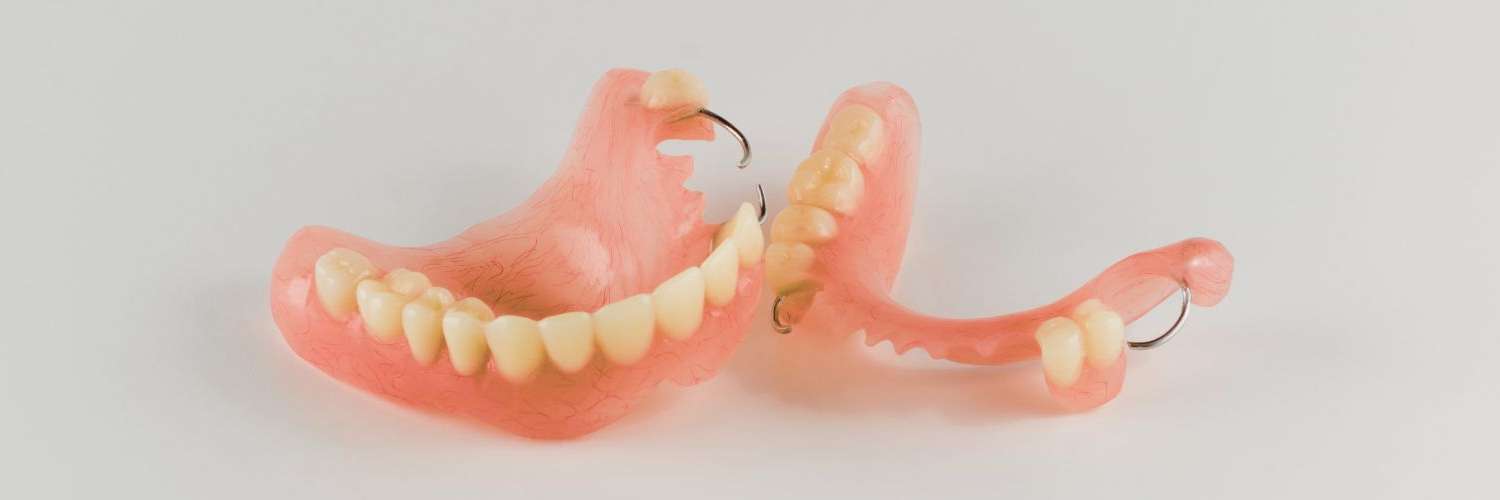
Flexible dentures are fabricated from thermoplastic nylon — Valplast is the most widely used brand in Singapore, with alternatives including BioFlex and TCS. Because the base flexes with gum movement and the clasps are gum-coloured rather than metal, they are aesthetically preferable for patients who replace teeth in visible areas of the smile.
They are best suited to partial tooth loss involving a small number of teeth. Two clinical limitations are important to understand before choosing this material:
- Cannot be relined. As the alveolar ridge naturally resorbs after tooth loss, acrylic and cobalt chrome dentures can be adjusted chairside. Flexible dentures cannot — when the fit changes, a replacement appliance is required.
- Cannot have teeth added. If further tooth loss occurs after the denture is made, the flexible base cannot be modified. A new appliance is needed.
CHAS-claimable at accredited private clinics. Cost: S$700 – S$1,800 per arch. Estimated lifespan: typically 5–8 years.
Acrylic partial dentures
Acrylic (PMMA) is the most affordable and widely prescribed material. The pink-tinted base mimics gum tissue; acrylic teeth are set into it. Clasps attach to adjacent natural teeth. Acrylic partial dentures are easy to adjust and repair as the gum and bone change over time — a clinically important advantage for patients who anticipate further tooth loss.
CHAS-claimable. Cost: S$300 – S$1,200 per arch. Estimated lifespan: typically 5–7 years; relining typically needed every 2–3 years.
Cobalt chrome partial dentures
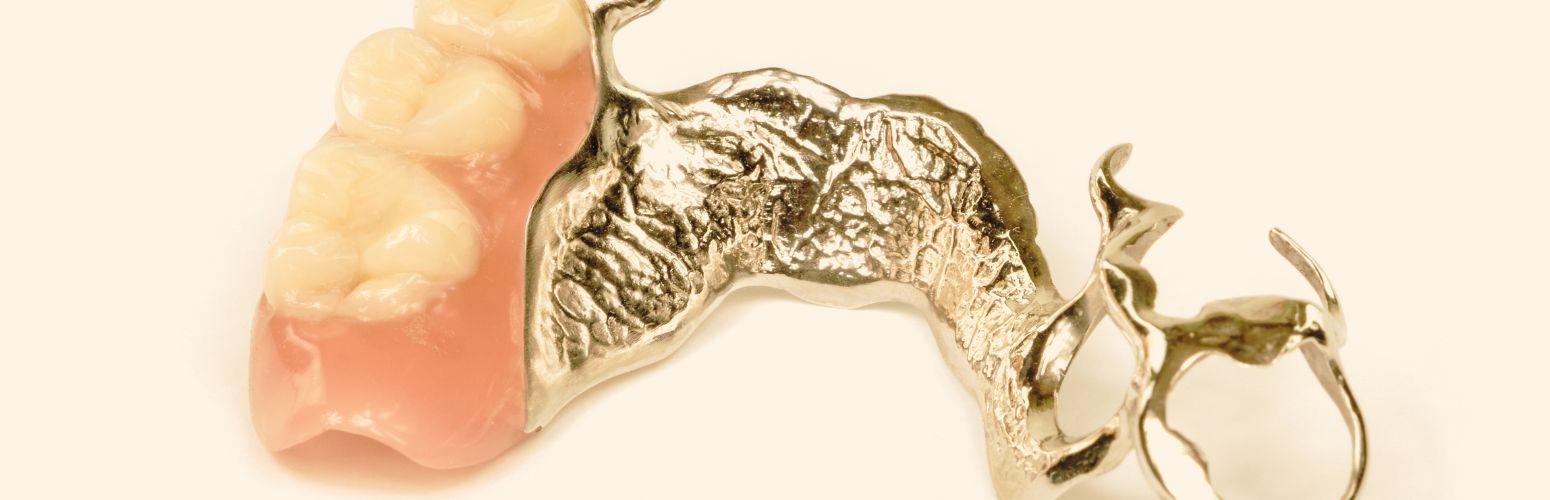
Cobalt chrome uses a precision-cast metal alloy framework to support acrylic and replacement teeth. The framework is thinner and stronger than an acrylic base, distributes bite forces more effectively across the arch, and places less stress on the abutment teeth it clasps. It is the most durable removable partial denture available and preferred for long-term daily wear.
Not suitable for patients with documented metal allergies. CHAS-claimable at accredited clinics. Cost: S$1,200 – S$3,500 per arch. Estimated lifespan: typically 10+ years.
| Factor | Acrylic | Flexible (Valplast) | Cobalt chrome |
|---|---|---|---|
| Visible clasps | Metal clasps visible | Gum-coloured clasps | Metal clasps visible |
| Comfort | Moderate (bulkier) | High (lightweight, flexible) | High (thin, rigid) |
| Can be relined? | Yes | No — replacement required | Yes |
| Teeth can be added? | Yes | No | Limited |
| Chewing force | Moderate | Lower (material flexes) | Best of three |
| CHAS claimable? | Yes | Yes | Yes |
| Est. lifespan | ~5–7 years | ~5–8 years | ~10+ years |
Complete Tooth Loss
Full (Complete) Dentures — When All Teeth Are Missing
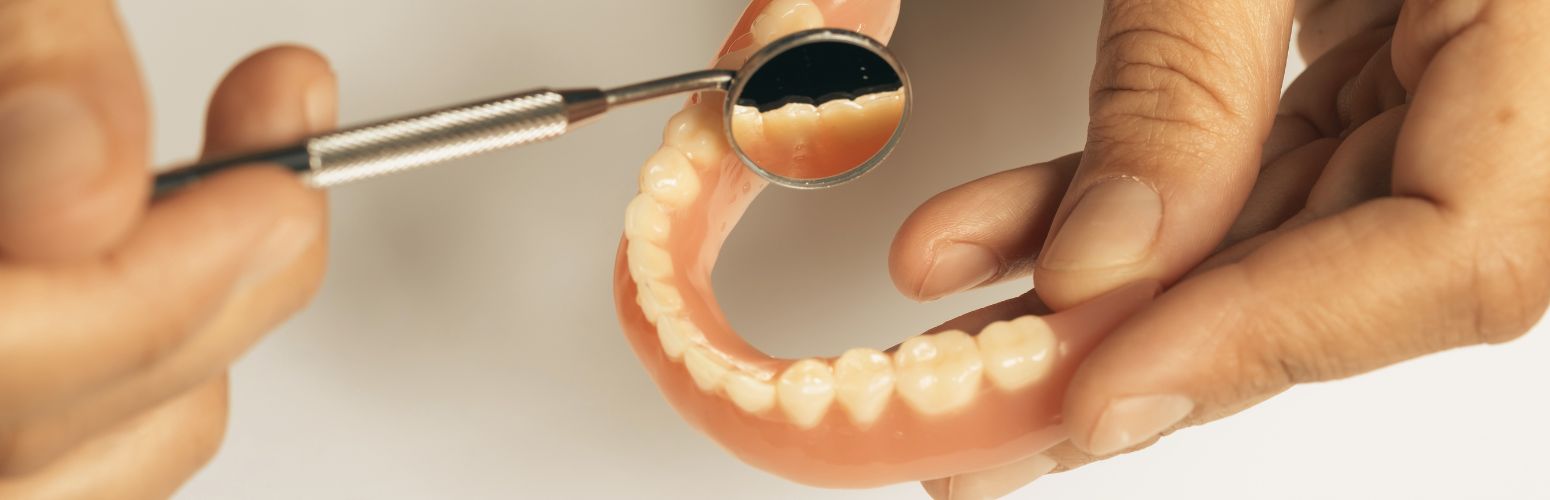
Full dentures — also called complete dentures — replace all teeth in one or both jaws. They rest directly on the gum tissue and residual alveolar ridge, held by suction against the palate (upper) or by the surrounding musculature and ridge anatomy (lower).
The upper full denture typically achieves good retention through palatal suction. The lower full denture is inherently less stable — the tongue, floor of the mouth, and limited ridge surface reduce the available contact area. This is the clinical reality that leads many patients with lower full dentures to eventually enquire about implant-retained options.
As the alveolar ridge resorbs progressively after tooth loss, a full denture that fits well today will require relining within 2–3 years and replacement at 5–7 years in most cases. Annual reviews allow early detection of fit changes before they cause discomfort or accelerated ridge resorption from a poorly distributed bite.
CHAS-claimable at accredited clinics: up to S$418.50 per arch for Pioneer Generation cardholders. Cost: S$800 – S$3,500 per arch at private clinics.
How dentures affect your face and smile
False teeth do more than replace missing teeth. They also support the lips, cheeks, and lower face. When teeth are missing for an extended period, the face can appear more collapsed over time as the jawbone resorbs and soft tissue support decreases. Well-designed dentures help restore facial height and proportions — the position of the teeth, the height of the bite, and the thickness of the base all affect the final appearance. This is particularly significant for patients who have worn loose dentures for years, where compensating habits have altered the way the face is held. Planning for facial balance is part of the clinical assessment — not an afterthought.
Suction dentures — for lower full denture stability
Suction dentures are full dentures fabricated using a refined impression technique that maximises passive retention against the gum tissue — particularly valuable for lower full dentures. They do not require implants but do require a precise clinical technique and careful impression-taking that is not standard at every clinic. If lower denture stability is a persistent concern, ask your dentist whether suction dentures are appropriate for your jaw anatomy.
Same-Day Placement
Immediate Dentures — Placed on the Day of Extraction
An immediate denture is fabricated before teeth are extracted and placed on the same day as the extractions. The patient leaves the appointment without a visible gap. They are useful when front teeth are being removed and maintaining appearance during healing is a priority.
The trade-off is fit. As gum tissue heals and the underlying bone remodels over the following weeks and months, the denture fit changes — adjustments, relining, or in many cases a replacement conventional denture will be needed within 3–6 months. Immediate dentures require more review visits than conventional dentures during the healing period.
Note that "same-day dentures" can also refer to CAD/CAM digital fabrication workflows available at selected clinics in Singapore — where a complete denture is digitally designed and milled without the patient needing to go without teeth. This is distinct from an immediate denture placed after extractions.
CHAS-claimable. Cost: S$1,500 – S$3,500 per arch.
| Factor | Immediate denture | Conventional denture |
|---|---|---|
| When placed | Same day as extractions | After 6–8 weeks of healing |
| Initial fit | Approximate — based on pre-extraction moulds | Precise — based on healed ridge |
| Adjustment visits | More — as gum heals and changes shape | Fewer |
| Gap in smile | None | Gap during healing period |
| Typical next step | Replacement denture at 3–6 months | Long-term use with periodic relining |
Maximum Stability
Implant-Supported Dentures — Retained and Fixed Options
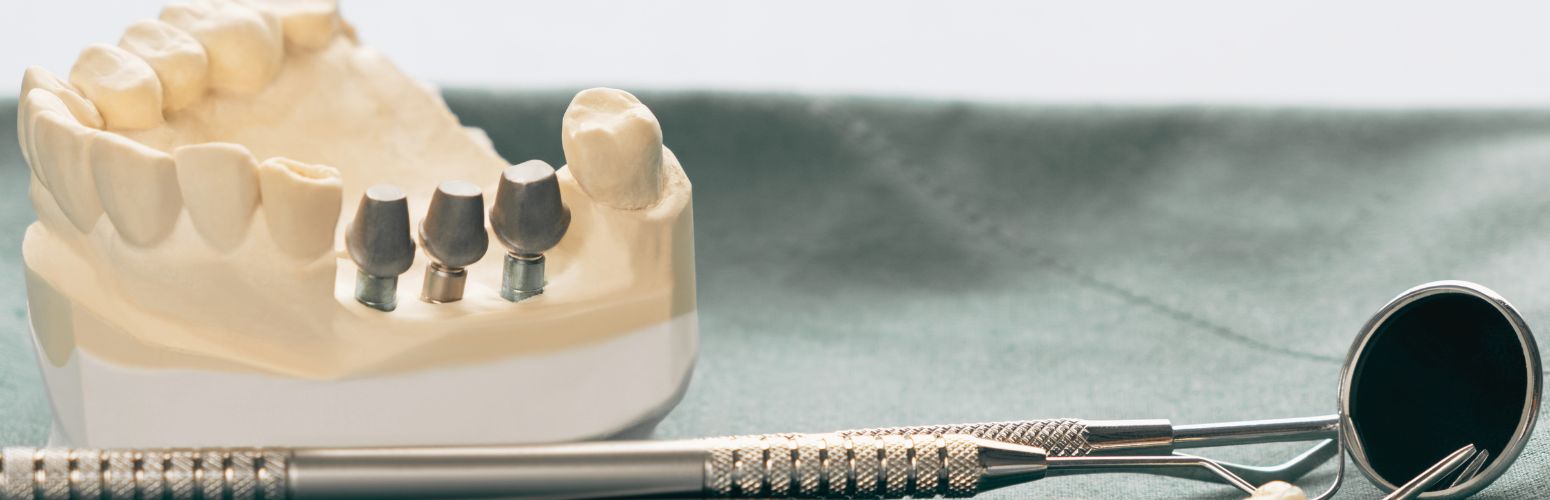
Implant-supported dentures use dental implants placed surgically in the jawbone to improve stability. Unlike conventional dentures that rest on the gum tissue, they transfer bite forces through the implants — which also stimulates the bone and prevents the ridge resorption that conventional dentures cannot address.
Implant-retained dentures (snap-on overdentures)
Implant-retained dentures — also called snap-on dentures or overdentures — use two to four implants as anchor points. The denture clips onto these anchors using locator attachments, ball attachments, or a bar system. They are removable for cleaning. Two implants in the lower arch is one of the most evidence-supported interventions for patients who struggle with a loose lower full denture.
The surgical component of implant placement is MediSave-claimable under TOSP SB816M — up to S$1,120 per implant. The denture prosthetic is not MediSave-claimable. Cost: S$8,000 – S$15,000 in total.
Implant-supported dentures (fixed or semi-fixed)
Implant-supported fixed dentures — including All-on-4 configurations — use four to six strategically placed implants to support a full arch prosthetic. They are not removed for cleaning in the same way a conventional denture is; maintenance is done chairside at review appointments. They deliver the chewing efficiency and stability closest to natural teeth of any denture option.
These require adequate bone volume or bone grafting where bone has been lost. The treatment timeline — including implant placement, osseointegration, and prosthetic delivery — typically spans three to six months. Cost: S$18,000 – S$25,000+ in total. MediSave applies to the surgical implant component.
| Factor | Implant-retained (snap-on) | Implant-supported (fixed) |
|---|---|---|
| Implants required | 2–4 | 4–6 |
| Removable? | Yes — patient removes for cleaning | No — cleaned in situ |
| Stability | High | Very high — closest to natural teeth |
| Bone preservation | Yes — implants stimulate bone | Yes |
| Typical cost (total) | S$8,000 – S$15,000 | S$18,000 – S$25,000+ |
| MediSave | Implant surgical component — TOSP SB816M | Implant surgical component — TOSP SB816M |
| Est. lifespan | 10+ years (prosthetic); implants may last longer | 10–15 years (prosthetic); implants may last longer |
One Missing Tooth
Single Tooth Denture (Flipper) — Replacing One Missing Tooth
A single tooth denture — sometimes called a flipper — is a removable partial denture that replaces one missing tooth. It is the most affordable prosthetic option for a single missing tooth and can be made quickly, making it useful as a temporary solution while a more permanent option (such as an implant or bridge) is planned.
It should not be confused with a dental bridge, which is a fixed appliance that anchors to adjacent teeth. A single tooth denture is removable and requires no preparation of neighbouring teeth.
At Dentalis, a single-tooth acrylic partial denture starts from S$550. As a long-term solution it has limitations — the clasps can place pressure on abutment teeth over time, and the appliance needs to be removed for cleaning and at night. For single tooth loss in a patient with adequate bone, a dental implant is generally the more stable long-term option.
CHAS-claimable at accredited clinics under the partial denture (simple) category.
Modern Fabrication
Digital and 3D Printed Dentures in Singapore
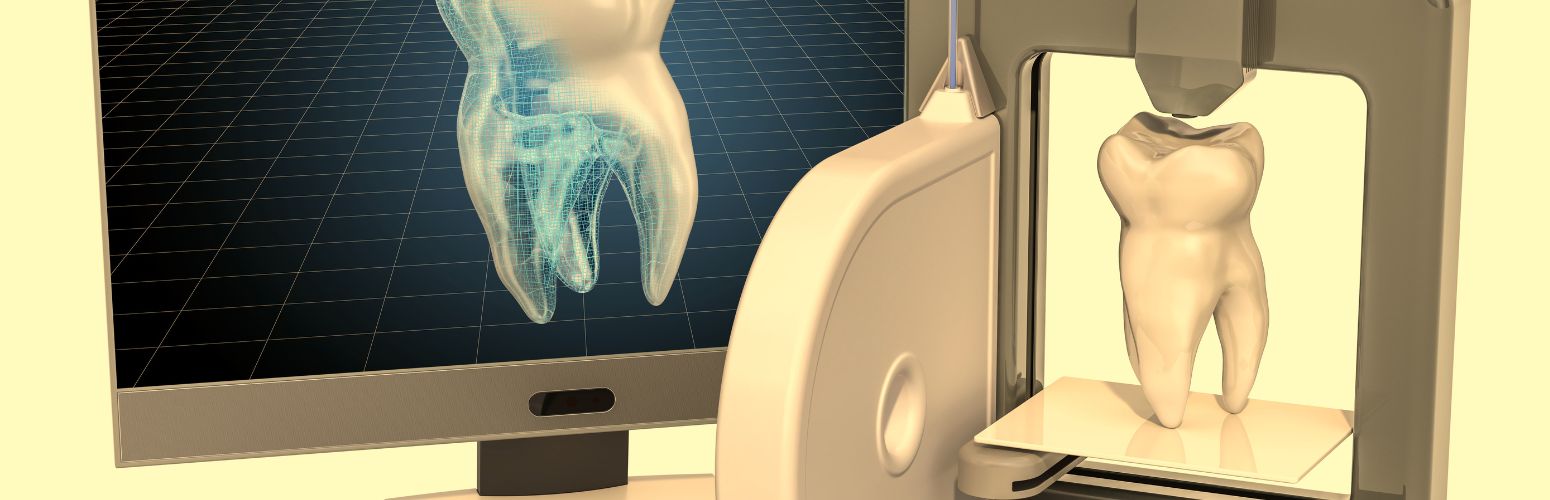
Digital and 3D printed dentures are fabricated using intraoral scanning, CAD/CAM software design, and digital milling or 3D printing workflows. They are available at selected clinics in Singapore — not universally offered.
Compared to traditional analogue dentures, digital workflows may offer faster turnaround, more consistent fit from visit to visit, fewer physical impression stages, and easier digital record storage for future remakes. Pricing is typically 10–20% above conventional equivalents.
Suitability depends on the clinical case, gum condition, and whether extractions are involved. For most patients considering full tooth loss or complex partial tooth loss, a clinical assessment is required before a digital workflow can be confirmed as appropriate.
Digital denture fabrication is not independently CHAS-claimable — the CHAS subsidy applies to the denture type (complete, partial simple, partial complex), not the fabrication method.
What Your Denture Is Made Of
Denture Materials Explained
The material used for a denture base and replacement teeth directly affects how it feels, how long it lasts, how it responds to bite forces, and how it is maintained. Two dentures of the same type can differ significantly in comfort and durability based on material alone.
| Material | Used in | Durability | Aesthetics | Repairability |
|---|---|---|---|---|
| Acrylic resin (PMMA) | Full dentures, acrylic partial bases | Moderate | Good — gum-coloured base | Easy to adjust and repair |
| Cobalt-chrome alloy Vitallium, Wironit |
Cobalt chrome partial frameworks | High | Moderate — metal visible | Can be relined; less easy to add teeth |
| Flexible thermoplastic Valplast, BioFlex, TCS |
Flexible partial dentures | Moderate | High — gum-coloured clasps | Cannot be relined or have teeth added |
| Acrylic denture teeth | Teeth on all removable dentures | Moderate | Good — available in shades | Replaceable |
| Composite resin teeth | Premium removable dentures | Moderate-high | High — closer to enamel translucency | Replaceable |
Note: Porcelain denture teeth are heavier and more brittle than acrylic — they are less commonly used in removable dentures in Singapore today. The material primarily affects aesthetics and occlusal wear rate.
How long do dentures last?
Most dentures last 5–10 years with proper care. Lifespan depends on:
- Material quality — cobalt chrome outlasts acrylic; implant-retained outlasts conventional
- Daily cleaning habits — plaque and staining accelerate surface wear
- Bite forces — heavy grinders wear down acrylic teeth faster
- Bone and gum changes — as the alveolar ridge resorbs, fit deteriorates and pressure distribution changes
- Whether implants are used — implants prevent ridge resorption, extending the useful life of the prosthetic
Regular annual reviews allow early detection of fit changes, wear, or bite shifts before they become uncomfortable. Catching a loose fit early is always easier and less costly than waiting until the denture no longer functions.
For a full breakdown of how material choice affects cost, see our dentures cost in Singapore guide.
Retention and Stability
How Dentures Stay in Place
Denture retention refers to how securely false teeth remain in the mouth during eating and speaking. Stability depends on the design of the denture, the shape of the remaining bone and gum, and the retention system used.
| Retention method | How it works | Typical use |
|---|---|---|
| Suction / atmospheric pressure | Seal between the denture base and the palate or ridge holds the appliance in place | Full upper dentures primarily |
| Clasps | Metal or nylon extensions grip the adjacent natural teeth | Partial dentures (acrylic and cobalt chrome) |
| Adhesives | Temporary bonding agent applied to the fitting surface | Supplement to conventional full dentures — not a substitute for proper fit |
| Implant attachments | Locator, ball, or bar attachments anchor the denture to implant fixtures | Implant-retained (snap-on) overdentures — strongest retention |
Loose dentures typically occur when the gums shrink, bone changes shape, or the denture base no longer matches the ridge accurately. A reline or adjustment may restore fit in the short term. If the ridge has changed significantly, or if a lower full denture has never been stable, an implant-retained option is worth discussing at your next review.
Subsidies by Type
CHAS and MediSave — Which Denture Types Are Covered?
CHAS dental subsidies (effective 1 October 2025) apply to all conventional removable dentures — regardless of whether the material is acrylic, cobalt chrome, or flexible thermoplastic. The subsidy amount depends on your card tier and the complexity of the denture (simple partial: fewer than 6 teeth; complex partial: 6 or more teeth; complete).
| Denture type | MediSave | CHAS (max — Pioneer Gen) |
|---|---|---|
| Acrylic partial (simple) | Not claimable | S$314.00 per arch |
| Acrylic partial (complex) | Not claimable | S$395.50 per arch |
| Flexible partial (Valplast) | Not claimable | S$314.00 – S$395.50 per arch |
| Cobalt chrome partial | Not claimable | S$314.00 – S$395.50 per arch |
| Full (complete) denture | Not claimable | S$418.50 per arch |
| Immediate denture | Not claimable | Claimable (same rates as conventional) |
| Denture reline or repair | Not claimable | S$85.00 per arch / year |
| Implant surgical placement (TOSP SB816M) | Up to S$1,120 per implant | Not applicable |
| Implant crown | Flexi-MediSave up to S$400 (age 60+) | Claimable at accredited clinics |
| Implant-supported prosthetic | Not claimable | Not claimable |
Source: CHAS Dental Subsidy Table, effective 1 October 2025 (chas.sg). Pioneer Generation rates shown. CHAS Orange, Blue, and Merdeka Generation receive lower amounts. CHAS Green cardholders are not eligible for dental subsidies. Only one partial denture claim per arch per 3 calendar years (shared across simple and complex types).
Dentalis is CHAS-accredited and MediSave-enrolled. For full CHAS subsidy tables by card tier, worked out-of-pocket examples, and the interactive cost calculator, see our dentures cost in Singapore guide.
"The most common mistake patients make is choosing a denture based on the lowest upfront cost. The question I ask first is: how likely is further tooth loss, and does this patient need a material they can modify over time — or one they cannot? Flexible dentures are excellent for certain situations and entirely wrong for others. That distinction is not obvious from a price list."
Dr Jonathan Liu · BDS (NUS) · Principal Dentist, Dentalis · 25+ Years
Common Questions
Frequently Asked Questions — Types of Dentures Singapore
The main types are: acrylic partial dentures, flexible partial dentures (e.g. Valplast), cobalt chrome partial dentures, full (complete) dentures, immediate dentures, implant-retained (snap-on) overdentures, and implant-supported (fixed arch) dentures. Each suits a different clinical situation based on how many teeth are missing, whether natural teeth remain, and how much stability is needed.
Flexible dentures are more comfortable against the gum and avoid visible metal clasps. However, they cannot be relined when the jaw changes shape, cannot have teeth added if further tooth loss occurs, and deliver lower chewing force than cobalt chrome. Whether they are the better choice depends on the patient's clinical situation — particularly the likelihood of future tooth loss and the need to modify the denture over time.
Implant-retained (snap-on) dentures clip onto 2–4 implants and are removed by the patient for cleaning. They offer much greater stability than conventional dentures but remain removable. Implant-supported (fixed) dentures use 4–6 implants to support a permanently fixed arch — not removed by the patient. They deliver the highest stability and are closest in function to natural teeth. Cost and surgical complexity are higher for fixed designs.
All conventional removable dentures are CHAS-claimable at accredited clinics — this includes acrylic partial dentures, flexible partial dentures (Valplast), cobalt chrome partial dentures, and full (complete) dentures. The subsidy depends on card tier and denture complexity. Only one partial denture claim per arch is permitted every three calendar years, shared across simple and complex types. Implant surgical placement is MediSave-claimable, not CHAS.
An immediate denture is made before tooth extractions and placed on the same day, so the patient leaves the appointment without a visible gap. It is useful when front teeth are removed and maintaining appearance during healing is important. As the gum heals and the bone remodels over weeks, the fit changes — adjustments, relining, or a replacement permanent denture will typically be needed within 3–6 months.
Yes. A single-tooth denture (sometimes called a flipper) is a removable partial denture that replaces one missing tooth. It is the most affordable option for a single missing tooth and can be made relatively quickly. At Dentalis, a single-tooth acrylic partial starts from S$550. It is CHAS-claimable. For a long-term solution, a dental implant offers better stability and prevents bone loss at the missing tooth site.
Cobalt chrome dentures use a precision-cast metal alloy framework to support acrylic teeth and a gum-coloured base. The framework is thinner and stronger than acrylic, distributes bite forces more effectively, and places less stress on the natural teeth it clasps. They are the most durable removable partial denture available — estimated lifespan of 10+ years — and are preferred for patients who want long-term daily reliability. Not suitable for documented metal allergies.
The right type depends on: how many teeth are missing, whether any natural teeth remain, your bone and gum condition, likelihood of future tooth loss, your budget, and how much stability matters for your diet and daily life. There is no universal answer — the choice between acrylic, flexible, cobalt chrome, or implant-supported options should follow a clinical assessment of your specific mouth. A consultation is the only reliable way to determine what is appropriate.
Flexible dentures avoid visible metal clasps and use gum-coloured attachments, making them aesthetically preferable for visible areas of the smile. Implant-supported dentures look closest to natural teeth because they are fixed, eliminate the need for clasps or adhesives, and can be designed with a precise emergence profile through the gum. Well-designed acrylic dentures with individualised tooth shading and gum contour can also look very natural — material choice matters less than the quality of the clinical planning and lab work.
For partial dentures used in long-term daily wear, cobalt chrome is generally the superior clinical choice — it is thinner, stronger, and places less stress on the natural teeth it clasps. The estimated lifespan is typically 10+ years vs 5–7 years for acrylic. The trade-off is higher upfront cost. For patients who need a budget-accessible starting point, or who expect further tooth loss and want a material that can be modified, acrylic is entirely appropriate. Not suitable for patients with documented metal allergies.
Yes, in two different ways. Immediate dentures are fabricated before tooth extractions and placed on the same day — so you leave the appointment without a visible gap. Separately, some clinics in Singapore offer CAD/CAM digital workflows that can fabricate a complete denture without traditional impressions in a faster turnaround — sometimes called "same-day" in the digital context. These are available at selected clinics and are not universally offered. Suitability for either approach depends on the clinical situation.
Conventional dentures typically take 3–5 visits over 2–4 weeks — covering consultation, impressions, bite registration, try-in, and final delivery. Immediate dentures are placed on the same day as extractions but require more follow-up visits during healing. Implant-supported dentures take 3–6 months in total, including implant placement, osseointegration, and prosthetic delivery. Digital CAD/CAM workflows may reduce fabrication time at clinics offering that technology.
Dentures at Dentalis
Not Sure Which Type Is Right for You?
Dr Jonathan Liu and his team assess your bone, gum, and bite before recommending a type. CHAS eligibility confirmed at consultation. Full cost estimate provided before treatment begins.
Consultation S$80 · 52 Craig Rd, Tanjong Pagar · Mon–Fri 9am–6pm · Sat 9am–1pm
Medical Review & Sources
BDS (National University of Singapore) · SDC Registration D21395J · 25+ years clinical experience · Principal Dentist, Dentalis
Subsidy data sourced from CHAS Dental Subsidy Table, effective 1 October 2025 (chas.sg) · MOH Dental Fee Benchmarks 2025 (moh.gov.sg) · CPF Board MediSave schedules (cpf.gov.sg). Clinical lifespan estimates: Carlsson GE & Omar R, Acta Odontol Scand 2010 (PMID 20695782) · PMID 33835064, Journal of Prosthodontics 2021. Last reviewed: July 2026.
Dentalis is a MediSave-enrolled and CHAS-accredited private dental clinic at 52 Craig Rd, Tanjong Pagar, Singapore 089690 — accessible from Maxwell MRT (Thomson-East Coast Line, Exit 3), Tanjong Pagar MRT (EW15), and Outram Park MRT (EW16/NE3/TE17). Recipient of three awards in 2026: APAC Insider Singapore Business Awards (Best Boutique Dental Practice; Patient Care Excellence) and Business Circle Awards (Best Boutique Aesthetic & Restorative Dental Practice). Rated 5.0 from 136 Google reviews.
This guide is for informational purposes only and does not constitute clinical advice. Treatment suitability and subsidy eligibility depend on individual clinical assessment. Consult a registered dental practitioner for advice specific to your situation.