
The Complete 2026 Guide
Dentures in Singapore: Types, Costs, Timeline & Best Options
 Medically reviewed by Dr Jonathan Liu,
BDS (NUS) · SDC Reg. D21395J · 25+ years experience
Last reviewed: July 2026
Medically reviewed by Dr Jonathan Liu,
BDS (NUS) · SDC Reg. D21395J · 25+ years experience
Last reviewed: July 2026
The Short Answer
Dentures in Singapore cost between S$300 and S$3,500 per arch at private dental clinics, depending on type and material. Acrylic partial dentures start from S$300 per arch; complete dentures range from S$800 to S$3,500 per arch; implant-supported dentures cost S$8,000 to S$25,000 in total. At public institutions, the National Dental Centre Singapore charges S$288 to S$1,317 per arch for partial to complete dentures at subsidised rates.
CHAS subsidies effective 1 October 2025 reduce costs by up to S$418.50 per arch for Pioneer Generation cardholders at accredited private clinics. Conventional removable dentures — acrylic, cobalt chrome, and flexible — are not claimable under MediSave. The surgical component of implant-supported dentures may be partially claimable.
The process typically takes three to five visits over two to four weeks. Most patients adapt within two to four weeks of receiving their dentures.
At a Glance
Dentures in Singapore — Key Facts
Cost Range
S$300 – S$3,500 /arch
Private clinics, before 9% GST · Implant-supported from S$8,000 total
Types Available
6 Types
Full · Partial (acrylic / cobalt chrome) · Flexible · Immediate · Implant-retained
CHAS Subsidy
Up to S$418.50
Per arch · Pioneer Generation complete denture · Accredited clinics only
Timeline
3 – 5 Visits
Over 2–4 weeks · Immediate dentures: same day · Implant-retained: 3–6 months
Lifespan
5 – 10 Years
Conventional · Relining may be needed at 3–5 years · Implant-retained: 15+ years
MediSave
Not Claimable
For conventional dentures · Implant surgical component may be claimable
Understanding Dentures
What Are Dentures and When Are They Recommended?
Dentures are custom-fitted, removable appliances that replace missing teeth and the surrounding gum tissue. They are fabricated from acrylic resin, cobalt-chrome metal framework, or thermoplastic nylon, depending on the clinical requirements of each case.
They are typically recommended for patients who have lost multiple teeth through decay, periodontitis, or trauma — and who either prefer a removable appliance, are not eligible for implants due to insufficient bone density or systemic health conditions, or require a cost-effective solution that can be fitted without surgery.
Dentures restore four things that tooth loss progressively takes away: chewing efficiency, speech clarity, facial height and lip support, and the appearance of the smile. When the alveolar ridge — the bony structure that once supported the teeth — begins to resorb after tooth loss, it causes the lower face to shorten and the cheeks to hollow inward. A well-designed denture slows the visible effect of this process.
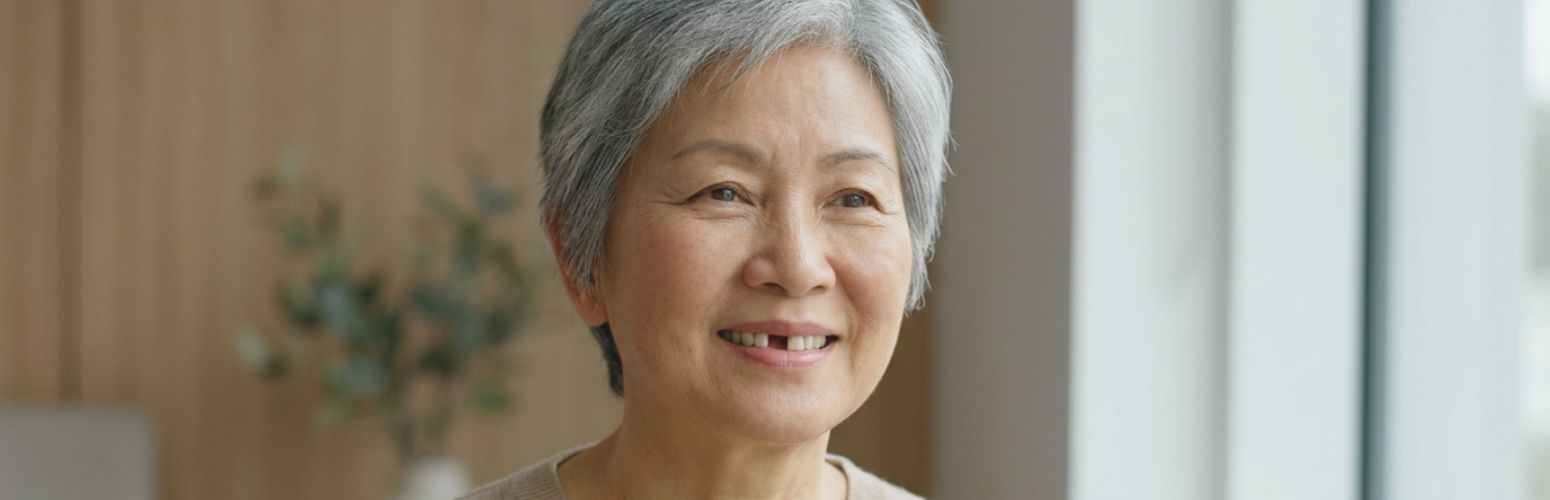
The decision of when to recommend dentures — rather than implants or a fixed bridge — depends on the extent of tooth loss, the condition of the residual ridge, the patient's medical history, and their budget. Dentures are not a lesser treatment. They are a clinically appropriate and widely chosen prosthetic solution for partial or full tooth loss across Singapore's public and private dental systems alike.
Choosing the Right Type
Types of Dentures Available in Singapore
There are six main types of dentures available in Singapore, each suited to different clinical situations, budgets, and preferences. The right choice depends on how many teeth are missing, whether any natural teeth remain, and your long-term goals for stability and comfort.
| Type | Best for | Material | Stability | Cost from (per arch) |
|---|---|---|---|---|
| Acrylic partial | Replacing some teeth on a budget | Acrylic resin | Moderate | S$300 |
| Cobalt chrome partial | Long-term daily wear | Metal framework + acrylic | Good | S$600 |
| Flexible partial | Aesthetics, no visible metal clasps | Thermoplastic nylon (e.g. Valplast) | Moderate | S$500 |
| Full (complete) | No remaining natural teeth | Acrylic resin | Moderate | S$800 |
| Immediate | Placed same day as extractions | Acrylic resin | Moderate (adjusts as healing progresses) | Varies by case |
| Implant-retained | Maximum stability; bone preservation | Acrylic over implant framework | High | From S$8,000 total |
Costs shown are indicative private clinic ranges before 9% GST. Final fees depend on material, complexity, and the number of teeth replaced. Polyclinic rates are lower; CHAS subsidies apply at accredited private clinics for eligible cardholders.
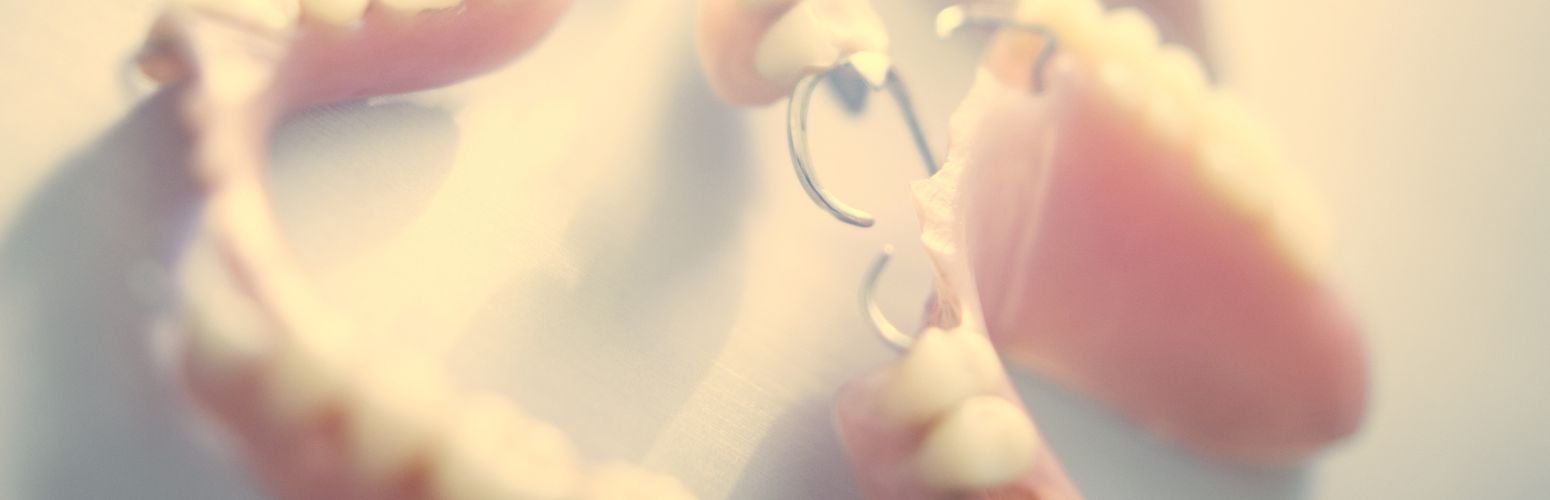
Partial dentures
Partial dentures replace one or several missing teeth while retaining the natural teeth that remain. They are held in place by clasps or precision attachments engaging the adjacent teeth. Acrylic partial dentures are the most affordable entry point — bulkier than metal alternatives but easy to adjust and repair as the gum and bone change over time. Cobalt-chrome partial dentures use a thin metal framework to distribute load across more of the arch. They are stronger, thinner, and generally more comfortable for daily wear, with a longer functional lifespan as a result.
Full (complete) dentures
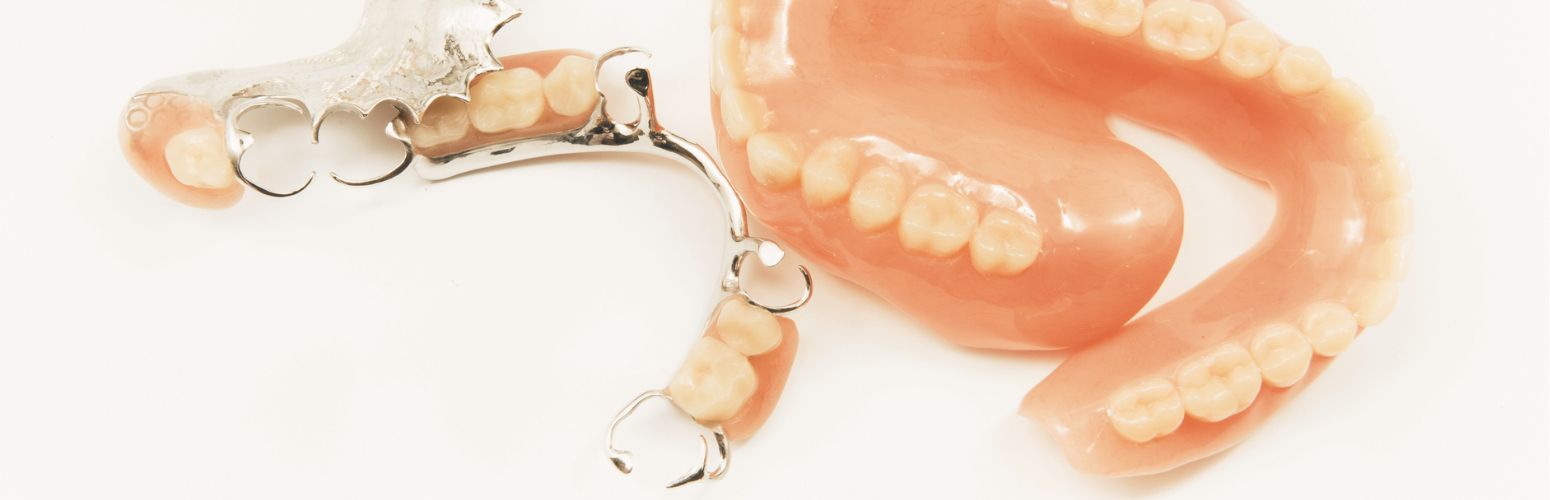
Full dentures replace all teeth in one or both jaws, resting directly on the gum tissue and residual alveolar ridge. The upper full denture typically achieves good retention through palatal suction. The lower full denture is inherently less stable — the tongue and floor of the mouth limit the available contact area — which leads many patients with lower full dentures to eventually enquire about implant-retained options.
Immediate dentures
An immediate denture is fabricated before extractions and placed on the same day. The patient leaves without a visible gap. As gum tissue and bone heal over the following weeks, the fit changes — adjustments and relining are expected. Immediate dentures require more review visits than conventional dentures during the healing period.
Suction dentures
For patients whose lower full denture keeps shifting during eating or speaking, suction dentures offer improved passive retention through a refined impression technique that maximises the contact surface with the gum tissue. They do not require implants but do require precise clinical technique. If stability is an ongoing concern, it is worth asking your dentist whether suction dentures are appropriate for your jaw anatomy.
Implant-retained dentures
Implant-retained dentures — also called snap-on dentures or overdentures — combine two to four dental implants with a denture prosthetic that clips onto them. They offer substantially greater stability than conventional dentures, prevent the bone resorption that follows tooth loss, and remove many of the dietary restrictions that conventional denture wearers often self-impose. The surgical component requires adequate bone volume. Where bone has been lost, grafting may be required before implants can be placed.
Pricing in Singapore
How Much Do Dentures Cost in Singapore?
Denture costs vary by type, material, number of teeth replaced, and whether the clinic is public or private. The following ranges reflect current private clinic fees across Singapore. For a full breakdown by material, CHAS worked examples, and the interactive cost calculator, see our dentures cost in Singapore guide.
| Type | Private clinic (per arch) | Public / NDCS (subsidised) |
|---|---|---|
| Acrylic partial denture | S$300 – S$1,200 | S$288 – S$550 |
| Cobalt chrome partial | S$600 – S$1,800 | S$400 – S$750 |
| Flexible partial denture | S$500 – S$2,000 | Not widely available |
| Full (complete) denture | S$800 – S$3,500 | S$550 – S$1,317 |
| Implant-retained denture | S$8,000 – S$25,000 (total) | Varies; implant component may be MediSave-claimable |
All private clinic fees before 9% GST. Public rates shown at subsidised basis for Singapore Citizens/PRs. Fees exclude consultation (approx. S$25–S$80 at polyclinics; S$80 at Dentalis), X-rays, and extractions if required. Source: MOH Dental Fee Benchmarks 2025; NDCS published rates; market survey June 2026.
What affects the final cost?
The material selected is the single largest cost variable within each denture type. A basic acrylic full denture and a premium customised complete denture with individual tooth characterisation and precise ridge adaptation can differ significantly in both fee and functional outcome. Other factors include the number of teeth being replaced (for partial dentures), the complexity of the bite and jaw relationship, the lab used, and whether any pre-prosthetic treatment — extractions, ridge modification — is required.
For a full breakdown of costs by type, material, and CHAS worked examples by card tier, see our Dentures Cost in Singapore guide.
Aesthetics & Comfort
Flexible Dentures in Singapore — Are They Worth It?
Flexible dentures are fabricated from thermoplastic materials — most commonly Valplast — that bend with the natural movements of the mouth. Because they use tooth-coloured or gum-coloured clasps rather than visible metal wires, they appeal to patients who prioritise the aesthetics of the appliance. Costs typically range from S$500 to S$2,000 per arch at private clinics depending on complexity, with some clinics starting from S$685.
They work well for partial tooth loss where a small number of teeth are being replaced, for patients with a documented allergy to acrylic or metal, or where appearance is a primary concern. They are not suitable as full dentures — they require some remaining natural teeth for stability.
| Factor | Flexible denture | Acrylic partial | Cobalt chrome partial |
|---|---|---|---|
| Aesthetics | No visible metal clasps | Metal clasps visible | Metal clasps visible |
| Comfort | Lightweight, flexible against gum | Bulkier, rigid | Thin, rigid |
| Can be relined? | No — new denture required | Yes | Yes |
| Can teeth be added? | No | Yes | Yes (limited) |
| Chewing force | Lower (material flexes) | Moderate | Best of three |
| CHAS claimable? | Yes, at accredited clinics | Yes | Yes |
CHAS subsidy applies to partial dentures as a category, regardless of base material. Eligibility depends on card tier and number of teeth replaced (simple: <6 teeth; complex: 6+ teeth).
The two most important clinical limitations are worth understanding before choosing a flexible denture. First, they cannot be relined — as the jawbone naturally resorbs after tooth loss, the denture will eventually need to be replaced rather than adjusted chairside. Second, teeth cannot be added later if further tooth loss occurs, requiring a new appliance. For patients who anticipate further tooth loss or want a long-term appliance they can modify over time, cobalt-chrome partial dentures are generally the more adaptable clinical choice.
Subsidies & Financial Assistance
CHAS Subsidies and MediSave — What Singapore Patients Can Claim
CHAS dental subsidies for dentures
Singapore Citizens with a valid CHAS card — including Pioneer Generation and Merdeka Generation cardholders — are eligible for denture subsidies at CHAS-accredited private dental clinics. Subsidies are applied per jaw (arch) and split by the complexity of the denture.
| Treatment (per arch) | CHAS Orange | CHAS Blue | Merdeka Generation | Pioneer Generation |
|---|---|---|---|---|
| Simple partial denture Replaces fewer than 6 teeth |
S$202.50 | S$304.00 | S$309.00 | S$314.00 |
| Complex partial denture Replaces 6 or more teeth |
S$257.00 | S$385.50 | S$390.50 | S$395.50 |
| Complete / full denture All teeth on one arch |
S$272.50 | S$408.50 | S$413.50 | S$418.50 |
| Denture repair or reline | S$50.00 | S$75.00 | S$80.00 | S$85.00 |
Source: Official CHAS Dental Subsidy Table effective 1 October 2025 (chas.sg). Amounts exclude GST. CHAS Green cardholders are not eligible for dental subsidies. One upper and one lower denture may be claimed every three calendar years. Repair or reline: once per arch per year. Subsidy is applied at the point of final issue — your card must be valid on the day of completion.
MediSave and conventional dentures
Conventional removable dentures — acrylic, cobalt chrome, and flexible — cannot be paid for using MediSave. This is a common point of confusion and worth stating clearly: MediSave does not cover conventional dentures.
The surgical component of implant-supported dentures — specifically implant fixture placement — may be claimable under MediSave subject to TOSP eligibility, up to S$1,120 per implant plus S$830 in consumables, to a maximum of S$1,950 per surgical procedure. The prosthetic component of an implant-retained denture is not MediSave-claimable. For full MediSave guidance, see our MediSave for Dental guide.
Flexi-MediSave (from 1 June 2026): Patients aged 60 and above may now use Flexi-MediSave for certain dental procedures including root canal treatment and crowns (up to S$400 per procedure). This does not apply to conventional dentures, but may be relevant if you require crown work prior to denture fabrication.
Making the Right Choice
Dentures vs Dental Implants vs Bridges — Which Is Right for You?
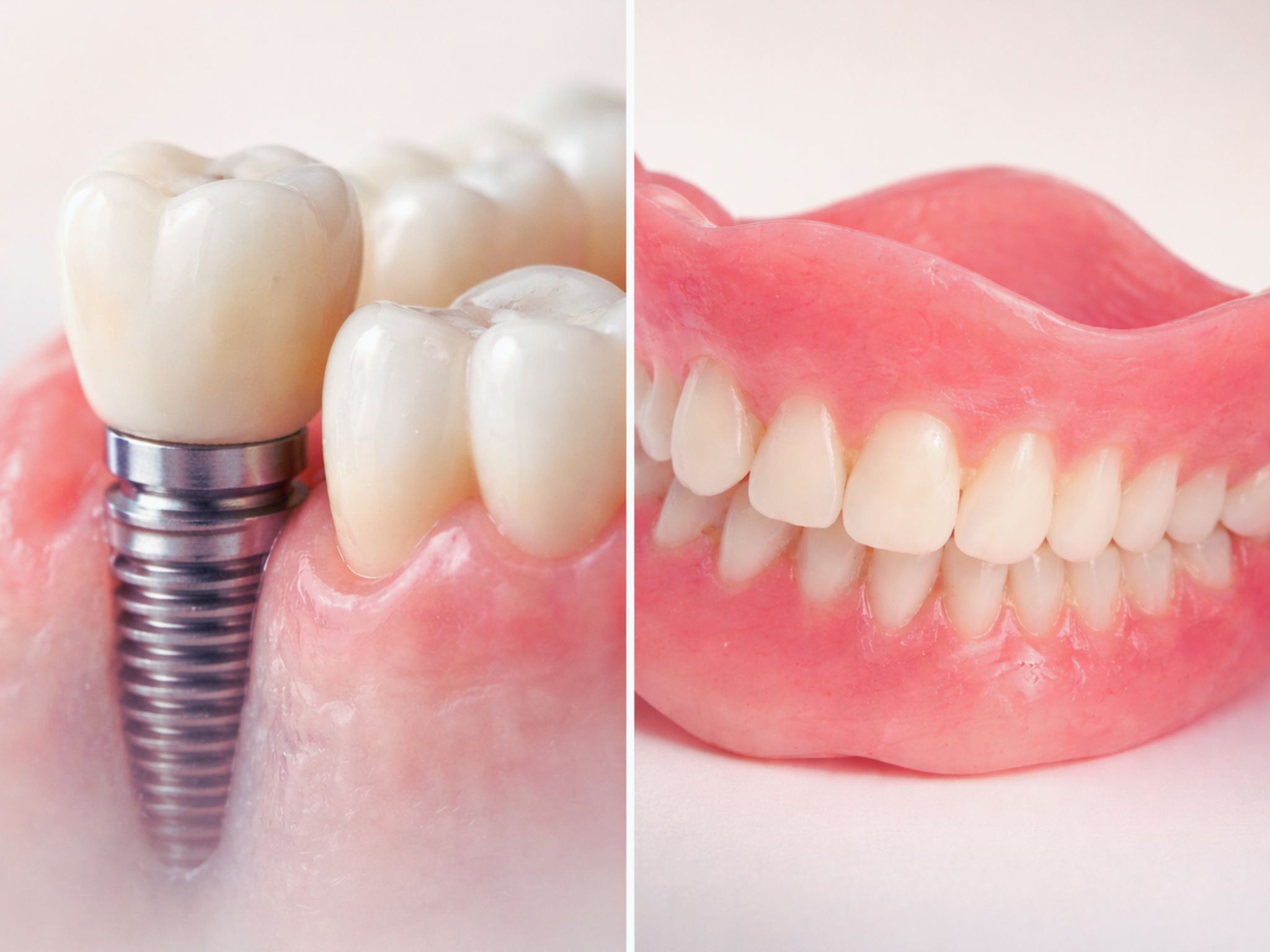
There is no universally correct answer. The right choice depends on how many teeth are missing, the condition of the remaining bone and teeth, your medical history, and your budget and priorities over the next five to fifteen years.
| Factor | Dentures | Dental implants | Fixed bridge |
|---|---|---|---|
| Surgery required | No | Yes | No |
| Stability | Moderate (removable) | High (fixed) | High (fixed) |
| Bone preservation | Does not prevent resorption | Prevents resorption | Does not prevent resorption |
| Reversibility | Fully removable | Permanent | Permanent |
| Entry cost | From S$300/arch | From S$1,950/implant | Varies by span and material |
| Lifespan | 5–10 years | 15+ years (implant) | 7–15 years |
| MediSave | Not claimable (conventional) | Surgical component claimable | Not claimable |
| CHAS | Claimable at accredited clinics | Not applicable | Not applicable |
Fees before 9% GST. Implant cost includes fixture and crown. Bridge cost varies by number of units and material. Source: Dentalis fee schedule; MOH Dental Fee Benchmarks 2025.
Dentures are the most accessible option and the only prosthetic category where CHAS subsidies apply directly. They do not prevent bone loss in the jaw over time — a clinically important long-term consideration — but for many patients they are a well-established and entirely appropriate choice. Implants prevent bone resorption and feel closer to natural teeth, but require surgery and a healing period, and are not appropriate for patients with uncontrolled systemic conditions, insufficient bone, or certain medications that affect bone metabolism. Fixed bridges replace missing teeth by anchoring to adjacent teeth; they are strong but require preparation of healthy tooth structure, and they do not address bone loss. For a detailed side-by-side comparison, see Dental Implants vs Dentures Singapore.
Public vs Private
Polyclinic vs Private Dental Clinic — What Is the Difference for Dentures?
Polyclinics and public institutions such as the National Dental Centre Singapore (NDCS) offer subsidised dental services including basic acrylic full and partial dentures for Singapore Citizens and Permanent Residents. Fees are lower — typically S$288 to S$1,317 per arch depending on subsidy tier and denture type — but waiting times can be longer, material choices are more limited, and specialist-level options such as flexible dentures, suction dentures, and implant-retained dentures are not widely available in the public system.
Private dental clinics offer shorter waiting times, a wider range of material options, named-clinician continuity throughout treatment, and access to digital impression technology. For patients with CHAS cards, subsidies at accredited private clinics significantly close the cost gap between the two settings for eligible patients.
| Factor | Polyclinic / NDCS | Private clinic (CHAS-accredited) |
|---|---|---|
| Fee (complete denture, per arch) | S$550 – S$1,317 (subsidised) | S$800 – S$3,500 before CHAS subsidy |
| After PG CHAS subsidy (S$418.50) | N/A (public rate already subsidised) | Effective fee from approx. S$450+ |
| Material range | Acrylic; some cobalt chrome | Full range incl. flexible & implant-retained |
| Waiting time | Longer (weeks to months) | Shorter (days to weeks) |
| Clinician continuity | Varies by appointment | Named dentist throughout |
For a Pioneer Generation cardholder requiring a full denture, CHAS subsidy of S$418.50 per arch at a private clinic brings the effective out-of-pocket cost materially closer to the polyclinic rate — with greater material choice and consistent clinician continuity throughout.
What to Expect
The Denture Process — Step by Step
Getting conventional dentures typically takes three to five visits over two to four weeks. Immediate dentures can be placed on the same day as extractions. Implant-retained dentures require three to six months, including implant placement and healing before the prosthetic is fitted.
Consultation and assessment
Examination of the teeth, gums, bite, and underlying bone. X-rays may be taken. If remaining teeth require extraction before the denture can be made, this is planned and sequenced at this stage. Options, costs, and timelines are explained before any treatment begins.
Impressions and bite registration
Precise impressions of the gum tissue and jaw are taken. The relationship between the upper and lower jaws is recorded to ensure the denture meets correctly in occlusion. Digital scanning may be used where clinically appropriate.
Try-in
A trial denture — usually in wax — is placed in the mouth to check fit, bite position, and appearance before the final appliance is fabricated. Adjustments at this stage are part of the process, not a sign of a problem.
Final delivery
The completed denture is fitted and checked across bite, retention, appearance, and speech. Minor spot adjustments are made chairside at this visit.
Review and fine-tuning
A follow-up visit is included in the fee. Sore spots, pressure areas, and minor adjustments to chewing comfort are addressed here. Most patients require one to two review visits in the first four weeks. Eating and speech typically improve within two to four weeks as the muscles adapt.
Maintenance
How to Care for Your Dentures
Daily care extends the life of a denture and protects the gum tissue beneath it.
Daily cleaning
Remove the denture after meals where possible and clean with a soft-bristled brush and non-abrasive denture cleaner. Standard toothpaste is too abrasive and will scratch the surface over time, creating pores where bacteria accumulate. Do not use hot water, which can warp acrylic.
Overnight storage
Most dentures should be removed overnight and stored in water or a denture-soaking solution. This rests the gum tissue and prevents the acrylic from drying out and warping. Flexible dentures in particular are sensitive to prolonged drying.
Handling
Dentures are fragile when dropped on a hard surface. Fill the sink with water or place a folded towel on the counter when cleaning them. A single fall on tile can crack an acrylic base beyond repair.
Annual reviews
Even if the denture feels comfortable, an annual check is advisable. The alveolar ridge continues to resorb gradually after tooth loss — a denture that fits well today may need relining within three to five years as the underlying bone changes shape. Catching this early maintains comfort and prevents the accelerated wear pattern that comes with a loose-fitting appliance.
Signs your denture needs attention: slipping or clicking during eating or speaking; persistent sore spots that do not resolve in a few days; visible cracks or chips; noticeable change in how the teeth meet. Book a review rather than increasing adhesive use — adhesive masks a fit problem, it does not solve it.
"Dentures are not a compromise — they are the right solution for many patients. For someone who has lived with missing teeth for years, a well-fitted full denture changes how they eat, how they speak, and how they carry themselves. Where implants are possible, my preference is always for the more stable option — but I've seen patients who wouldn't consider surgery leave with dentures that gave them back function they'd lost for a decade. That outcome matters."
Dr Jonathan Liu · BDS (NUS) · Principal Dentist, Dentalis · 25+ Years
Common Questions
Frequently Asked Questions
Partial dentures start from S$300 per arch for acrylic and S$500 for flexible at private clinics. Full dentures range from S$800 to S$3,500 per arch. Implant-supported dentures cost S$8,000 to S$25,000 in total. At public institutions such as NDCS, subsidised rates start from S$288 per arch. CHAS subsidies of up to S$418.50 per arch apply at accredited clinics for eligible cardholders.
No. Conventional removable dentures — acrylic, cobalt chrome, and flexible — are not claimable under MediSave. The surgical component of implant-supported dentures may be partially claimable under MediSave subject to TOSP eligibility. CHAS subsidies apply to conventional dentures at accredited private clinics for eligible cardholders.
CHAS subsidies (effective 1 October 2025) range from S$202.50 per arch for CHAS Orange simple partial dentures, up to S$418.50 per arch for Pioneer Generation complete dentures. Merdeka Generation and CHAS Blue cardholders receive amounts between these figures. The subsidy applies once every three calendar years for full dentures. Repair and reline can be claimed once per arch per year. CHAS Green cardholders are not eligible for dental subsidies.
Yes — this is called an immediate denture. It is fabricated before the extractions and placed on the same day, so you leave the appointment without a visible gap. As the gum tissue heals and the underlying bone remodels over the following weeks and months, the denture fit will change. Adjustments, relining, or in some cases a replacement denture will be needed. Immediate dentures require more follow-up visits than conventional dentures during the healing period.
Most conventional dentures have a functional lifespan of five to ten years. Acrylic dentures may require relining within three to five years as the jawbone naturally resorbs after tooth loss. Implant-retained dentures can last considerably longer — the implants themselves may remain intact for fifteen years or more if the prosthetic component is maintained and reviewed regularly.
Flexible dentures are more comfortable against the gum tissue and avoid visible metal clasps — advantages that matter to many patients. However, they cannot be relined as the jaw changes shape, cannot have teeth added if further tooth loss occurs, and deliver lower chewing force than cobalt chrome framework dentures. They are well-suited to some cases and a poor clinical fit for others. A proper assessment is the only reliable way to determine which is appropriate for your situation.
A well-fitting denture stays in place during eating and speaking without movement, does not cause persistent sore spots on the gum, and allows you to eat a reasonably normal diet without restriction. Signs of poor fit include slipping or clicking while chewing, sore areas that do not resolve within a few days of delivery, visible rocking when pressure is applied, or a noticeable change in how the teeth come together. These warrant a review appointment — not increased adhesive use, which masks a fit problem rather than correcting it.
Suction dentures are full dentures fabricated using a refined impression technique that maximises passive retention against the gum tissue, particularly useful for lower full dentures which are inherently less stable. They do not require implants but do require precise clinical technique and careful impression-taking. Not all clinics offer them — if lower denture stability is a persistent concern, ask your dentist whether suction dentures are appropriate for your jaw anatomy.
Most patients adapt to eating and speaking within two to four weeks. Starting with soft foods and gradually returning to a normal diet is advisable. Speech changes — particularly with sibilant sounds — typically resolve with practice within the same period. Confidence with both functions usually improves considerably within the first month.
Without a prosthetic replacement, the alveolar bone that supported the missing teeth begins to resorb. Adjacent teeth drift toward the gap. Opposing teeth may over-erupt. Over time, this changes the bite, the facial profile, and the range of treatment options available. Early replacement preserves more bone and keeps more options open — including implants, which require adequate bone volume to be placed.
An implant-retained denture — also called a snap-on denture or overdenture — uses two to four implants placed in the jawbone as anchors. The denture clips onto these anchors, offering substantially greater stability than a conventional denture. It is removable for cleaning. The implant component may be partially claimable under MediSave. Total cost typically ranges from S$8,000 to S$25,000 depending on the number of implants and the prosthetic design.
Metal clasp partial dentures, if not designed and fitted carefully, can exert pressure on the teeth they attach to — particularly if those teeth are already compromised. Well-designed cobalt-chrome frameworks distribute load across the arch to minimise stress on abutment teeth. Flexible dentures avoid metal clasps entirely. Regular review allows any early wear on abutment teeth to be identified and managed before it becomes a significant problem.
Dentures at Dentalis
A Consultation Clarifies Everything
Dr Jonathan Liu assesses fit, bone, and bite before recommending a type. Options and fees are explained before treatment begins. CHAS cards accepted.
Consultation S$80 · 52 Craig Rd, Tanjong Pagar · Mon–Fri 9am–6pm · Sat 9am–1pm
Medical Review & Credentials
BDS (National University of Singapore) · SDC Registration D21395J · 25+ years clinical experience · Principal Dentist, Dentalis
This guide draws on published CHAS dental subsidy figures (chas.sg, effective 1 October 2025), MOH Dental Fee Benchmarks 2025, CPF Board MediSave schedules, and NDCS published rates. Clinical evidence references: PMID 33835064 (patient satisfaction with complete and partial dentures, Journal of Prosthodontics 2021); PMID 28789860 (oral health-related quality of life, systematic review). Last reviewed: July 2026.
Dentalis is a MediSave-accredited and CHAS-accredited private dental clinic at 52 Craig Rd, Tanjong Pagar, Singapore 089690 — accessible from Maxwell MRT (Thomson-East Coast Line, Exit 3), Tanjong Pagar MRT (EW15), and Outram Park MRT (EW16/NE3/TE17). Recipient of three awards in 2026: APAC Insider Singapore Business Awards (Best Boutique Dental Practice; Patient Care Excellence) and Business Circle Awards (Best Boutique Aesthetic & Restorative Dental Practice). Rated 5.0 from 136 Google reviews.
This guide is for informational purposes only and does not constitute clinical advice. Treatment suitability, fees, and subsidy eligibility depend on individual clinical assessment. Consult a registered dental practitioner for advice specific to your situation.