
Clear Aligner Comparison Guide
Invisalign vs Zenyum
Singapore (2026)
A neutral, clinically accurate comparison of cost, case suitability, supervision model, technology, and treatment predictability — to help you understand which clear aligner system fits your needs. Reviewed by Dr Jonathan Liu, Singapore CBD.
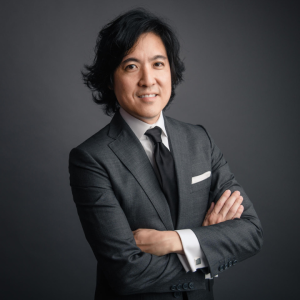 Reviewed by Dr Jonathan Liu — BDS (NUS) · Certified Invisalign Provider
Published Oct 2025 · Updated Jul 2026 · 14 min read
Reviewed by Dr Jonathan Liu — BDS (NUS) · Certified Invisalign Provider
Published Oct 2025 · Updated Jul 2026 · 14 min read
The Short Answer
Invisalign vs Zenyum — the key differences at a glance
Both Invisalign and Zenyum use clear, removable aligners to straighten teeth. The right choice depends on your case complexity, comfort with remote versus in-clinic supervision, and budget. Zenyum is designed for mild to moderate cosmetic alignment; Invisalign handles mild through complex cases including bite correction.
| Factor | Invisalign | Zenyum |
|---|---|---|
| Case suitability | Mild to complex — including bite issues | Mild to moderate cosmetic alignment |
| Supervision | In-person dentist reviews every 6–8 weeks | Hybrid — app-based remote + partner dentists |
| Aligner material | SmartTrack® — proprietary multilayer polyurethane | Medical-grade plastic |
| Gumline trimming | Scalloped to individual gumline | Standard trim |
| Attachments / IPR | Used when clinically needed | Not standard |
| Bite correction | Possible, case-dependent | Not designed for bite correction |
| Refinements | Typically included for Moderate / Comprehensive tiers | Free within expiry period; rescan S$100 |
| Singapore cost (headline) | S$2,500–S$10,500+ before GST | S$2,790–S$4,990 (GST may apply) |
| Consultation | S$80 before GST at Dentalis (iTero scan, X-ray, simulation) | S$150–S$200 at partner clinic (separate) |
| Retainers | Vivera® S$600–S$890 before GST at Dentalis (separate) | S$410–S$760 (separate; GST may apply) |
| MediSave / CHAS | Not claimable | Not claimable |
| Regulatory status | FDA-cleared 1998 · US | ISO 13485:2016 certified · BSI |
Dentalis provides Invisalign exclusively — Zenyum pricing sourced from aligner.zenyum.sg, July 2026. All Dentalis fees before 9% GST.
At a Glance
Key numbers — Invisalign vs Zenyum Singapore 2026
Invisalign — SG range
S$2,500–S$10,500+
Before GST · Dentalis: from S$2,800
Zenyum — SG range
S$2,790–S$4,990
GST may apply · excl. consultation & retainers
Zenyum retainers
S$410–S$760
Not included in headline price
Subsidies (both)
Not claimable
MediSave · CHAS · Pioneer · Merdeka
The Two Systems
Understanding Invisalign and Zenyum
Clear aligners are not a single category. Invisalign and Zenyum occupy different parts of the aligner market by design — different case scope, different supervision models, and different pricing structures. Neither is universally right or wrong; they suit different patient needs.
Invisalign
Align Technology — founded 1997, San Jose, USA. FDA-cleared in 1998. Proprietary SmartTrack® material, in-clinic treatment model, and the world's largest orthodontic dataset with over 22 million cases treated globally.
Designed for mild through complex cases. Uses ClinCheck® digital planning, gumline-scalloped aligner edges, SmartForce® attachments for precision movements, and IPR where required. Treatment is dentist-led with in-person reviews every 6–8 weeks.
- Full range of case complexity — mild to complex
- SmartForce® attachments for precision movement
- Bite correction capability, case-dependent
- In-person clinical monitoring throughout
- Structured refinement protocols
Zenyum
Zenyum Pte Ltd — founded 2018, Singapore. ISO 13485:2016 certified (BSI). A homegrown, digitally-led aligner brand operating across Southeast Asia, built on a hybrid supervision model combining partner dentist visits with app-based remote monitoring.
Designed for mild to moderate cosmetic alignment. Three main tiers: ZenyumClear™, ZenyumClear™ Plus, ZenyumClear™ Extra. Suits patients with simpler alignment needs who prioritise affordability and fewer clinic visits.
- Mild to moderate cosmetic alignment
- Remote monitoring via Zenyum app
- Minimum 3 in-person clinic visits
- Lower headline cost — simpler case scope
- Partner dentist network across Singapore
Case Suitability
Which cases each system can treat
This is the most important factor. A system that cannot treat your case is not a viable option regardless of price — confirmed at in-person clinical assessment, not online.
| Case type | Invisalign | Zenyum |
|---|---|---|
| Minor crowding (front teeth) | ✓ Suitable | ✓ Suitable |
| Minor spacing (front teeth) | ✓ Suitable | ✓ Suitable |
| Mild post-brace relapse (anterior) | ✓ Suitable | Case-dependent |
| Moderate crowding | ✓ Suitable | ZenyumClear™ Plus — limited |
| Severe crowding | ✓ Comprehensive tier | ZenyumClear™ Extra — case-dependent |
| Tooth rotations | ✓ With SmartForce® attachments | Limited without attachments |
| Vertical movements | ✓ With attachments | Not designed for vertical movements |
| Overbite correction | ✓ Case-dependent — bite ramps + attachments | Not designed for bite correction |
| Underbite / crossbite | ✓ Case-dependent | Not designed for bite correction |
| Open bite / deep bite | ✓ Case-dependent | Not designed for bite correction |
If your case involves bite correction, rotations, or movement beyond mild anterior alignment, confirm with a clinician whether either system can address your specific presentation. A clinical assessment and 3D scan — not a photo upload — is the standard for this determination.
Supervision Model
In-clinic vs hybrid remote monitoring — what the difference means
Invisalign — in-person clinical review
Review appointments every 6–8 weeks include physical examination of gum health, bite development, and aligner tracking against the ClinCheck® digital plan. If a tooth is not tracking correctly, the dentist identifies it at that appointment and can adjust the plan before additional aligners are worn.
In-person review enables direct assessment of factors that photographs cannot capture — including bite forces, gum changes, and root movement concerns. For complex cases, in-person monitoring at regular intervals is the clinical standard.
At Dentalis, Dr Jonathan Liu personally plans and reviews every case. Tracking is assessed and adjustments initiated at the same appointment.
Zenyum — hybrid remote monitoring
Zenyum's model combines an initial in-person assessment at a partner dental clinic with progress monitoring via the Zenyum app, where patients submit photographs at regular intervals. A minimum of 3 in-person clinic visits are included. The app flags progress concerns for review by the clinical team.
This model suits mild cases well: the tooth movements are simpler, and reduced appointment frequency is a genuine advantage for patients with uncomplicated presentations.
What photographic monitoring can and cannot assess
App-based photo review provides different information from an in-person examination. Bite forces, gum pocket depth, root movement, and bone health all require physical examination and, where indicated, radiographic evaluation. This is why Zenyum's case selection focuses on simpler presentations where these factors carry less clinical weight.
Technology
Aligner material and technology differences
SmartTrack® material — Invisalign
Proprietary multilayer polyurethane developed by Align Technology. Applies constant, gentle force rather than high initial force that decays rapidly. The material is designed to recover shape after removal, maintaining consistent pressure throughout each tray's wear period.
SmartForce® attachments — Invisalign
Tooth-coloured composite shapes bonded to selected teeth, giving aligners a directional anchor for rotations, vertical movements, and bite correction. Not all cases require them. Their presence in a treatment plan signals movements that require more than surface pressure from a smooth aligner. See the Invisalign attachments guide.
ClinCheck® digital planning — Invisalign
Each case is staged digitally from start to finish before a single aligner is produced. Patients preview the full treatment sequence. Movements are planned within fractions of a millimetre, enabling management of complex multi-step corrections.
Zenyum — aligner material and planning
Zenyum uses medical-grade aligner plastic appropriate for the movements its case scope requires. Digital treatment planning is included; a digital preview of the proposed outcome is provided before aligners are manufactured. For mild cosmetic alignment the material performs adequately within its designed scope.
Cost Comparison
Invisalign vs Zenyum — what you actually pay
Headline prices do not reflect total treatment cost. The meaningful comparison includes consultation, retainers, refinement rescans, and GST.
Invisalign — Singapore market range and Dentalis fees
| Tier | Singapore range | Dentalis fee | Refinements |
|---|---|---|---|
| Express — up to 7 aligners | S$2,500–S$4,800 | From S$2,800 | Typically not required |
| Lite — up to 14 aligners | S$4,800–S$6,500 | From S$4,500 | Verify with clinic |
| Moderate — up to 26 aligners | S$6,000–S$8,500 | From S$6,000 | Typically included at Dentalis |
| Comprehensive — unlimited aligners | S$7,000–S$10,500+ | S$7,000–S$8,500 | Typically included at Dentalis |
All Dentalis fees before 9% GST. Consultation at Dentalis (The Dentalis Align): S$80 before GST — standalone fee covering iTero Lumina Pro 3D scan, OPG X-ray, and AI simulation. Vivera® retainers at Dentalis: S$600 (1 set) / S$890 (3 sets) before GST — purchased separately from the aligner treatment fee.
Zenyum — confirmed pricing (aligner.zenyum.sg, July 2026)
| Tier | Headline price | Duration | Consultation (extra) | Retainers (extra) | Refinement rescan |
|---|---|---|---|---|---|
| ZenyumClear™ — mild to moderate | S$2,790 | ~7 months | S$150–S$200 | S$410–S$760 | S$100 per scan |
| ZenyumClear™ Plus — moderate to complex | S$4,490 | ~10 months | S$150–S$200 | S$410–S$760 | S$100 per scan |
| ZenyumClear™ Extra — severe crowding | S$4,990 | Up to 15 months | S$150–S$200 | S$410–S$760 | S$100 per scan |
Zenyum pricing sourced from aligner.zenyum.sg, July 2026. GST may apply. Scaling/polishing S$80–S$130 if required. Refinements are free within the treatment expiry period but require a S$100 rescan paid directly to the clinic. Retainers are prescribed separately — not included in the headline aligner price.
Total cost example: ZenyumClear™ at S$2,790 plus consultation (S$200) + scaling (S$100) + retainers (S$560 for 3 sets) = approximately S$3,650 before GST. Invisalign Lite at Dentalis from S$4,500 before GST, with a separate S$80 consultation and retainers at S$600–S$890. The gap narrows when all costs are included — and reverses for cases where only Invisalign applies.
Why Invisalign costs more
- SmartTrack® manufacturing and Align Technology lab fees
- ClinCheck® treatment planning depth
- SmartForce® attachments for complex movements
- In-person clinical review appointments
- Broader case scope requires more clinical time
Why Zenyum costs less
- Case scope restricted to simpler movements
- Remote-first monitoring reduces clinical time per case
- Fewer in-person appointments in the headline price
- Standardised production workflow for anterior cases
Cost comparison is meaningful only between systems that can both treat your case. For a case requiring bite correction, the comparison is Invisalign vs Invisalign — Zenyum is not a clinical option for that scope. For full Dentalis pricing detail, see the Invisalign cost Singapore guide.
A clinical assessment and iTero Lumina Pro 3D scan at Dentalis (S$80 before GST) tells you whether your case needs Invisalign's full capability or whether a simpler system would be clinically appropriate — before you commit to either.
What Each Includes
Treatment inclusions — what to confirm before committing
| Item | Invisalign at Dentalis | Zenyum |
|---|---|---|
| Initial consultation | S$80 before GST — standalone fee. Includes iTero Lumina Pro 3D scan, OPG X-ray, AI simulation, and cost breakdown. | S$150–S$200 at partner clinic (paid directly to clinic) |
| 3D scan | Included in S$80 consultation | Included in consultation fee at partner clinic |
| Digital treatment plan | Full ClinCheck® staging by Dr Jonathan Liu — staged before manufacture | Included — digital preview provided before manufacture |
| Attachments / IPR | Where clinically indicated — no additional charge | Not standard — limited availability |
| Review appointments | Every 6–8 weeks in-person with Dr Jonathan Liu | Minimum 3 in-person visits; primarily remote via app |
| Refinements | Typically included for Moderate and Comprehensive tiers at Dentalis | Free within expiry period — rescan S$100 extra per scan |
| Retainers | Vivera® S$600 (1 set) / S$890 (3 sets) before GST — purchased separately from aligner fee | S$410 (2 sets) / S$560 (3 sets) / S$760 (5 sets) — purchased separately; GST may apply |
| Scaling / polishing | Billed separately if required | S$80–S$130 extra if required |
Always confirm refinement inclusion policy and retainer cost before committing to either system. These are the most common sources of unexpected additional expense after treatment begins.
Subsidies & Insurance
Are Invisalign or Zenyum subsidised?
Neither system qualifies for government subsidies. Both are classified as elective orthodontic treatment under MOH guidelines.
MediSave
Not claimable for either system.
MediSave covers surgical dental procedures only. Elective orthodontics is excluded entirely.
CHAS / Pioneer / Merdeka
Not claimable for either system.
All three schemes cover basic and restorative dental care only. Elective orthodontics is excluded.
Private insurance
Possible with an orthodontic rider.
Some corporate and private plans include an orthodontic rider (annual cap typically S$1,000–S$3,000). Verify directly with your insurer. Dentalis provides itemised invoices for submission.
Corporate Flexi-Dollar
May apply — check with HR.
Some employer dental benefit schemes cover orthodontics. Confirm eligibility with your HR department.
Decision Guide
Which system is right for your situation?
These scenarios reflect the most common decision points. They are starting points — your specific case requires in-person clinical assessment to determine the appropriate system.
- Mild crowding or spacing of front teeth, no bite issues, comfortable with app monitoring — Zenyum may be appropriate.
If your primary goal is minor aesthetic improvement and your case has been assessed as clinically simple, Zenyum's lower cost and remote model can be a sensible fit. - Moderate crowding, any bite concern, or significant rotation — confirm with a clinician whether Invisalign is needed.
Clinical tools including attachments, IPR, and bite ramps are available in Invisalign treatment for these movements. Confirm at assessment which system can address your presentation. - Fewest clinic visits and lowest cost for a confirmed simple case — Zenyum's hybrid model is convenient.
Fewer in-person appointments is a genuine advantage for patients with uncomplicated cases in Singapore's working environment. - Complex case, or preference for the same clinician throughout — Invisalign with in-person review at Dentalis.
At Dentalis, Dr Jonathan Liu personally plans and monitors every case. In-person review enables direct assessment at each stage. - Previously completed Zenyum and want to progress further — clinical assessment first.
Switching from Zenyum to Invisalign is possible. A new iTero scan, full diagnostic records, and a new ClinCheck® plan are required. The S$80 consultation at Dentalis covers this assessment.
Before Starting Any Aligner Treatment
When an in-person clinical assessment matters
Regardless of which system you choose, an in-person dental evaluation before starting aligner treatment is the clinical standard. Seek in-person assessment before starting if you have bite problems or jaw discomfort, significant rotations, gum recession or active periodontal disease, a history of tooth mobility, severe crowding, or a previous orthodontic relapse involving structural concerns.
An in-person assessment allows direct examination of bite function, gum health, and root position — factors relevant to treatment planning that a photograph cannot fully assess. Where indicated, radiographic evaluation may also be required.
Orthodontic treatment involves more than cosmetic repositioning of front teeth. Jaw function, gum health, and root movement are factors best assessed in person — not through photographs alone.
"Invisalign outcomes are determined by biomechanical planning, refinement control, and patient compliance — not by marketing tier labels. Long-term stability depends on how precisely each case is designed and monitored. For simple cases, simpler systems can work well. The clinical question is always: what does your specific case require?"
Dr Jonathan Liu · BDS (NUS) · Principal Dentist, Dentalis · Certified Invisalign Provider · 25+ Years
Common Questions
Frequently asked questions
For mild cosmetic alignment of front teeth — minor crowding or spacing — Zenyum can be effective within its designed case scope. For moderate to complex cases, bite correction, significant rotations, or vertical movements, Invisalign offers broader capability through SmartForce® attachments, IPR, and structured refinement protocols. The appropriate system depends on your case complexity, confirmed at clinical assessment.
The headline price is lower: ZenyumClear™ S$2,790, ZenyumClear™ Plus S$4,490, ZenyumClear™ Extra S$4,990 (GST may apply). These prices exclude consultation (S$150–S$200), scaling if required (S$80–S$130), refinement rescans (S$100 per scan), and retainers (S$410–S$760). Including all costs, ZenyumClear™ totals approximately S$3,650 before GST for a typical case. Invisalign at Dentalis starts from S$2,800 before GST plus a S$80 consultation. The gap narrows when compared on a total-cost basis.
Yes. A switch is possible following a full clinical assessment at Dentalis. New iTero Lumina Pro 3D scans, diagnostic records, and a new ClinCheck® digital treatment plan are required. Dr Jonathan Liu assesses the current position of your teeth and how much movement remains before planning the next stage. The consultation fee is S$80 before GST.
Zenyum's standard tiers do not routinely use attachments. SmartForce® attachments in Invisalign give aligners a directional anchor for rotations, vertical movements, and bite-related forces — which is part of why Invisalign can manage a broader range of clinical presentations. Verify current Zenyum clinical protocols directly with Zenyum for your specific case.
Treatment duration depends on case complexity. Zenyum cases are typically shorter because they address simpler movements: ZenyumClear™ averages 7 months, Plus 10 months, Extra up to 15 months. A mild Invisalign Express case takes approximately 7 weeks; Comprehensive cases 12–24 months. Comparing a simple Zenyum case duration to a complex Invisalign case is not a meaningful comparison — they are treating different presentations.
They serve different purposes and are not direct substitutes. Invisalign handles mild to complex cases including bite correction and multi-arch movements. Zenyum is designed for mild to moderate cosmetic alignment and suits patients who need only minor front-tooth adjustment and are comfortable with app-based monitoring. For the appropriate case type, both can be effective. The question is which system suits your specific clinical presentation.
No. Both are classified as elective orthodontic treatment under MOH guidelines and are not claimable under MediSave, CHAS, Pioneer Generation, or Merdeka Generation subsidies. Some private insurance plans with an orthodontic rider may provide partial annual coverage of S$1,000–S$3,000 — verify directly with your insurer.
Next Step
Find out which system
your case actually needs
A clinical assessment and iTero Lumina Pro 3D scan at Dentalis confirms your case complexity — and gives you a clear, honest view of which aligner system is appropriate before you commit to either. Consultation: S$80 before GST.
52 Craig Rd, Tanjong Pagar · Mon–Fri 9am–6pm · Sat 9am–1pm
Clinical Sources
References
Clinical claims cited in this guide are drawn from the following primary sources. Zenyum pricing sourced from aligner.zenyum.sg, July 2026.
- White DW et al. — Discomfort associated with Invisalign and traditional brackets: A randomized, prospective trial. Angle Orthodontist, 2017;87(6):801–808. RCT confirming significantly lower discomfort for Invisalign vs fixed braces.
- AlBaqshi FS et al. — Factors Influencing the Predictability and Success of Invisalign Aligners: A Systematic Review. Cureus, 2025;17(10):e95845. Systematic review of clinical predictability variables in aligner treatment.
- Lin E et al. — Differences in Finished Case Quality Between Invisalign and Traditional Fixed Appliances: A Randomized Controlled Trial. Angle Orthodontist, 2022;92(2):173–179. RCT comparing case outcome quality between Invisalign and braces.
- Ministry of Health Singapore. Healthcare Services (Advertisement) Regulations 2021. MOH HCSA advertising rules applied throughout this guide.
Medical Review & Credentials
BDS (National University of Singapore) · SDC Registration D21395J · 25+ years clinical experience · Certified Invisalign Provider · Principal Dentist, Dentalis
Invisalign pricing sourced from Singapore market data, July 2026. Zenyum pricing sourced from aligner.zenyum.sg, July 2026. Clinical evidence sourced from PubMed-indexed peer-reviewed journals. MOH HCSA advertising rules applied throughout. Last reviewed: July 2026. Next scheduled review: January 2027.
Dentalis is a MediSave-accredited and CHAS-accredited private dental clinic at 52 Craig Rd, Tanjong Pagar, Singapore 089690 — accessible from Maxwell MRT (Thomson-East Coast Line, Exit 3), Tanjong Pagar MRT (EW15), and Outram Park MRT (EW16/NE3/TE17). Recipient of three global awards in 2026. Rated 5.0 from 136 Google reviews.
This guide is for informational purposes and does not constitute clinical advice. Zenyum pricing is sourced from public Zenyum pages and subject to change — verify directly with Zenyum before making a decision. Dentalis provides Invisalign exclusively and does not represent Zenyum. Published in accordance with the Healthcare Services (Advertisement) Regulations 2021.