
TL;DR
- ✓Dental X-rays use low-dose radiation to detect problems invisible during a visual exam
- ✓Not every patient needs X-rays at every visit — frequency depends on risk, age, and dental history
- ✓Common types include bitewing, periapical, and panoramic (OPG), each with a specific purpose
- ✓Modern dental X-rays are considered safe when clinically indicated and used selectively
Last medically reviewed: February 2026 · Reviewed by Dr Jonathan Liu, Principal Dentist
What Are Dental X-rays?
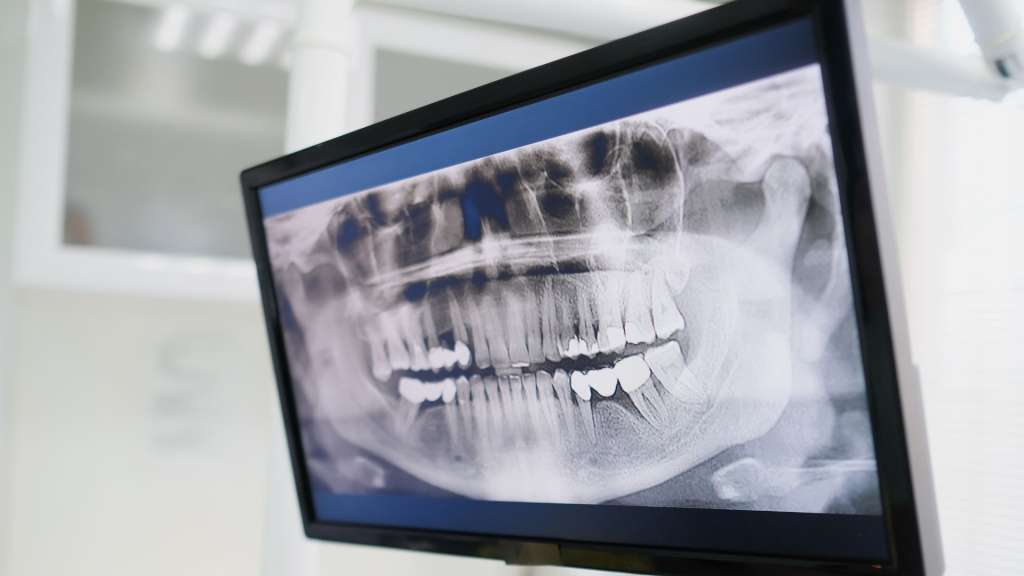
Dental X-rays are diagnostic images that show the teeth, gums, and jawbone beneath the surface. They help dentists detect issues such as cavities between teeth, bone loss from gum disease, infections at tooth roots, and impacted teeth — before symptoms appear. Dental X-rays do not replace a visual exam. They complement it by revealing areas that cannot be seen with the naked eye.
How Do They Work?
Dental X-rays use low levels of radiation to create images of hard tissues like teeth and bone. Modern digital systems require significantly less radiation than older film-based methods. Protective measures such as lead aprons and thyroid collars are commonly used to further minimise exposure.
What Can X-rays Detect That a Check-Up Cannot?
- Cavities between teeth
- Early bone loss linked to gum disease
- Infections or abscesses at tooth roots
- Impacted wisdom teeth
- Changes in bone structure or density
- Tooth development issues in younger patients
These findings help guide early, less invasive care — often preventing more complex treatment later.
Types of Dental X-rays
How Often Should X-rays Be Taken?
There is no fixed schedule. Frequency depends on individual risk factors, not routine timelines.
Are Dental X-rays Safe?
Yes. Modern dental X-rays are considered safe when clinically justified. Radiation exposure is low and comparable to everyday background radiation. Dentists balance diagnostic benefit, patient age and health, and prior imaging history. X-rays are recommended only when they add meaningful clinical value.
Can Patients Choose to Skip Dental X-rays?
Yes. Dental X-rays require patient consent, and patients can decline them. However, skipping X-rays may limit what a dentist can confidently diagnose. In some situations, deferring an X-ray is reasonable: if recent good-quality X-rays already exist, if the patient is low-risk with stable oral health, or if imaging would not change the treatment plan. The decision should be discussed openly.
What Does This Mean in Real Practice?
In real practice, dental X-rays are a decision, not a default. Dentists regularly weigh what they are trying to confirm or rule out, whether the X-ray will change care decisions, and the patient's comfort, concerns, and history.
At Dentalis, X-rays are used selectively as part of a shared decision-making approach, where patients understand why an image is recommended and what happens if it is deferred. This approach builds trust and reduces unnecessary imaging.
Early detection through X-rays often means simpler, less invasive care. At the same time, appropriate restraint avoids overuse. Good dentistry is about clarity, not volume of procedures.
No. Frequency depends on your individual risk profile, not a fixed schedule. Low-risk adults may need X-rays only every 2–3 years. Your dentist should explain why an X-ray is recommended at each visit.
Modern dental X-rays use very low radiation doses. Lead aprons provide additional protection. For non-urgent cases, many dentists prefer to defer X-rays during the first trimester unless clinically necessary. Always inform your dentist if you are pregnant.
An OPG (Orthopantomogram) is a panoramic X-ray showing all teeth and jaws in one image. It is commonly used for wisdom tooth assessment, implant planning, and surgical planning. At Dentalis, OPGs are available from $100 (before GST).

Dr Jonathan Liu
Dental Surgeon · Principal Dentist · Dentalis
25+ years of clinical experience. Focuses on evidence-based, patient-centred dentistry and the appropriate use of diagnostic tools such as dental X-rays to support safe, informed care.
Related Reading
Shared Decision-Making at Dentalis
X-rays Explained. Consent Before Anything.
At Dentalis, any X-ray is recommended with a clear explanation of why it is needed and what happens if deferred. 52 Craig Road, Tanjong Pagar.